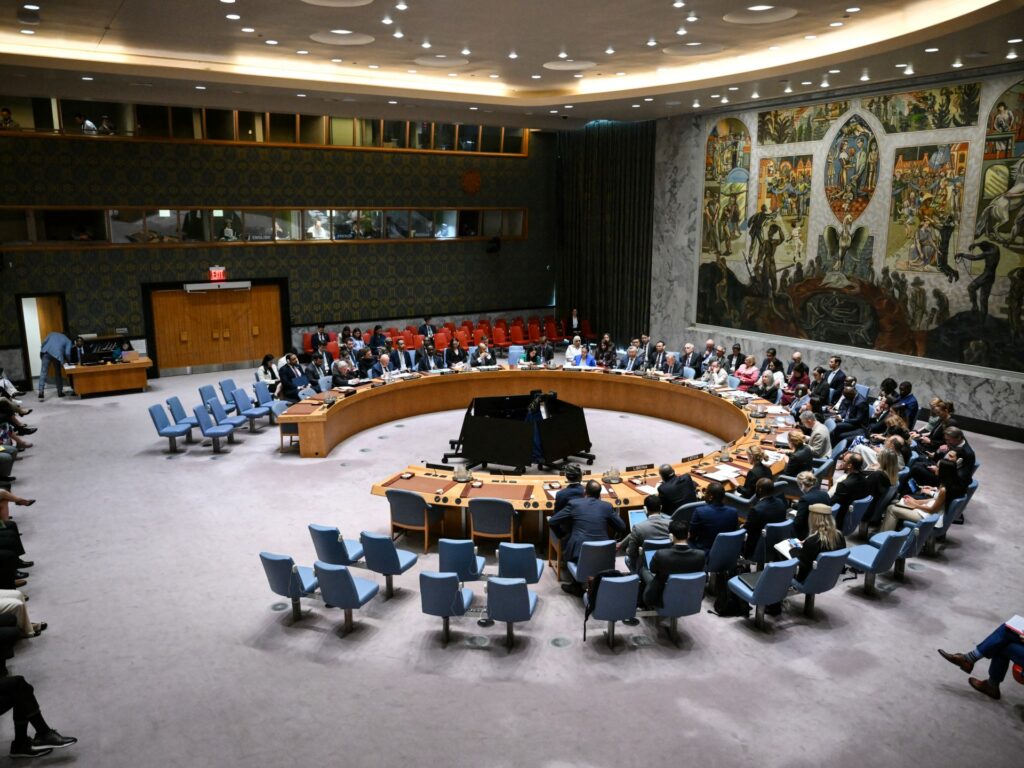
United Nations Secretary-General António Guterres has issued a stark warning about the growing geopolitical divides within the UN Security Council that are severely hampering its ability to act decisively on pressing global crises. Speaking at a recent international forum, Guterres highlighted how entrenched political divisions between member states are paralyzing the Council, preventing effective responses to conflicts, humanitarian emergencies, and other critical issues facing the world today.
The Security Council, tasked with maintaining international peace and security, has long been criticized for its structure which grants veto power to its five permanent members: the United States, Russia, China, France, and the United Kingdom. This arrangement often leads to deadlock, as any of the permanent members can block resolutions to which they object. Guterres emphasized that this dynamic is no longer sustainable in an increasingly complex and interconnected world.
“The current geopolitical fault lines within the Security Council not only stall vital resolutions but also erode the credibility of the United Nations,” Guterres noted. He argued that this impasse undermines the Council’s foundational role in addressing conflicts and preventing escalations, thereby threatening global stability.
In response, Guterres has called for urgent Security Council reform to better reflect the contemporary geopolitical realities and ensure more effective decision-making. He proposed expanding the Council’s membership to include more diverse voices from regions currently underrepresented and revisiting the use of the veto power to prevent misuse that hampers action.
The Secretary-General underscored that the reformation of the Security Council is paramount to revitalizing the United Nations’ capacity to tackle key challenges such as climate change, terrorism, pandemics, and protracted conflicts. Without reform, the UN risks continued paralysis in face of growing crises.
Several member states and international observers have expressed support for the call to reform, acknowledging that addressing issues such as the Syrian conflict, the Ukraine crisis, and other geopolitical flashpoints requires a more adaptable and responsive Security Council.
However, achieving reform remains a complex endeavor. The permanent members’ unanimous consent is required to amend the UN Charter, creating a high bar for changes. Some argue that the vested interests and geopolitical rivalries among the powerful states perpetuate the current structure.
Guterres’ appeal also highlighted the importance of multilateralism and cooperation among nations to surmount global challenges. He urged Security Council members to prioritize collective security over narrow national interests, emphasizing that global peace and prosperity depend on collaborative action.
As the international community grapples with numerous overlapping crises, the spotlight on the Security Council’s effectiveness has intensified. Guterres’ warning serves as a crucial reminder of the urgent need to bridge geopolitical divides and reform the world’s premier security body to ensure it can fulfill its vital mandate in the 21st century.