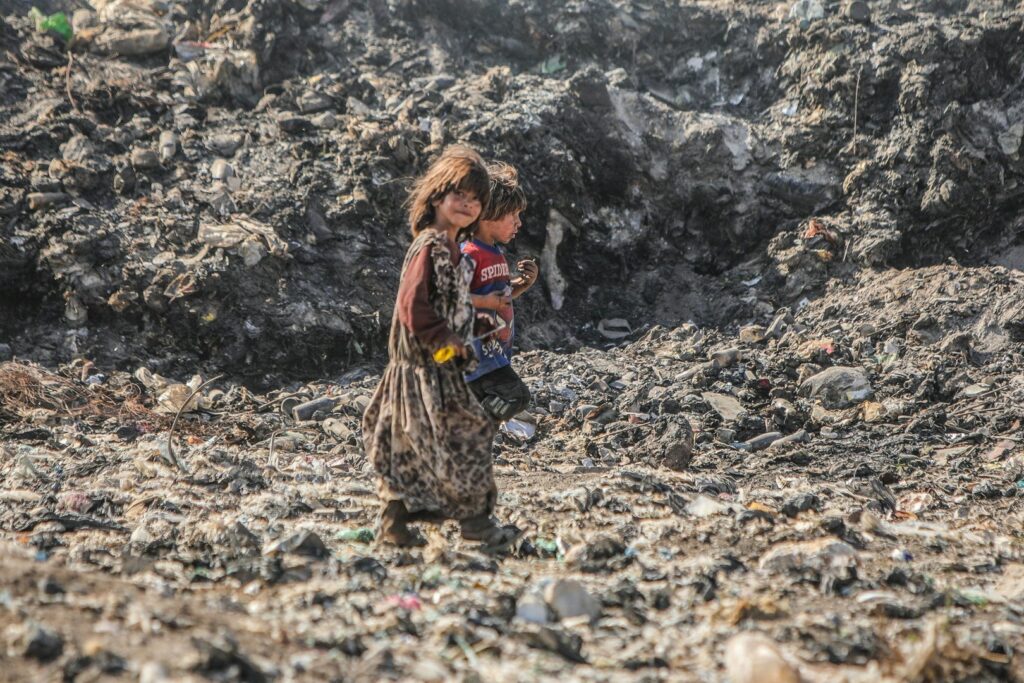
In the midst of an ongoing humanitarian crisis, displaced Syrians have been compelled to scavenge through vast piles of garbage to survive. Forced from their homes by conflict and economic collapse, many refugees and internally displaced individuals face dire living conditions and limited access to employment. With few options to support themselves and their families, these vulnerable populations resort to digging through mountains of burning and toxic waste in search of recyclable materials such as plastic, metal, and glass.
This grim practice highlights the severe economic hardship and lack of social safety nets available to displaced Syrians. Recycling collected materials offers a meager income source but exposes individuals, including children, to hazardous health risks from toxic fumes and contaminated waste. The garbage heaps, often set ablaze to extract metal or reduce volume, release noxious smoke, compounding respiratory problems and other illnesses.
Local and international humanitarian organizations have raised alarms about the worsening conditions faced by displaced Syrians who rely on such dangerous livelihoods. Efforts to provide aid, job training, and safer economic alternatives are underway but remain insufficient amid the scale of displacement and poverty. Advocacy for increased funding and protection of vulnerable populations is crucial to prevent exploitation and improve living standards.
The situation also sheds light on systemic issues such as inadequate waste management infrastructure and environmental degradation in conflict-affected regions. Garbage accumulation and informal recycling without regulation or safety measures underscore the need for sustainable approaches to waste and economic development.
For countless displaced Syrians, scavenging through garbage is a desperate act of survival rather than choice, revealing the profound human toll of ongoing instability and displacement. Addressing these challenges requires a coordinated response to meet immediate humanitarian needs and long-term strategies to restore livelihoods, dignity, and safety for those uprooted by conflict.