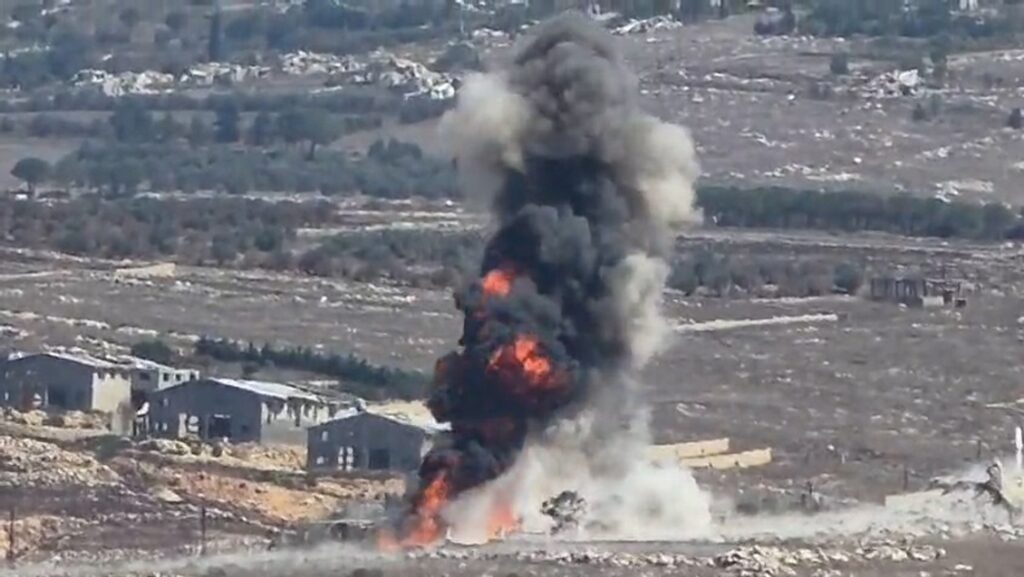
Tensions have escalated in the Middle East as Israel conducted airstrikes on southern Lebanon, following the postponement of the next round of US-mediated talks between Israel and Lebanon. The postponement of these talks has raised concerns over regional stability and the potential for further conflict.
The scheduled negotiations, aimed at resolving longstanding disputes between the two neighboring countries, were expected to address issues including border demarcation and security arrangements. However, the latest round of discussions has been delayed with no new date announced, triggering a surge in military activity.
The Israeli Defense Forces (IDF) confirmed that airstrikes targeted strategic locations in southern Lebanon, aiming to neutralize threats posed by militant groups operating in the region. Official statements from Israel cited recent hostile activities against Israeli territory as justification for their actions.
Lebanese officials condemned the bombings, accusing Israel of violating Lebanese sovereignty and escalating tensions unnecessarily. The Lebanese government has called for international intervention to prevent further violence and to resume dialogue swiftly.
This incident highlights the fragile state of peace efforts in the region, where decades of conflict have left border issues unresolved and mistrust entrenched. The United States, acting as mediator, has expressed disappointment over the postponement and reiterated its commitment to facilitating a peaceful resolution.
Regional analysts warn that continued military exchanges could derail diplomatic efforts and lead to a wider conflict. Both sides face internal pressures, with political factions demanding firm responses to perceived aggression.
The international community has urged restraint from all parties, emphasizing the importance of dialogue and negotiation. Several nations have offered to support renewed discussions and provide platforms for conflict resolution.
This development underscores the complex interplay of security, diplomacy, and politics in the Middle East. Effective communication and compromise remain crucial to breaking the cycle of violence and achieving lasting peace between Israel and Lebanon.
As the situation remains volatile, global attention is focused on the potential for renewed talks and the urgent need for de-escalation measures. The coming weeks will be pivotal in determining the trajectory of Israeli-Lebanese relations and the broader stability of the region.