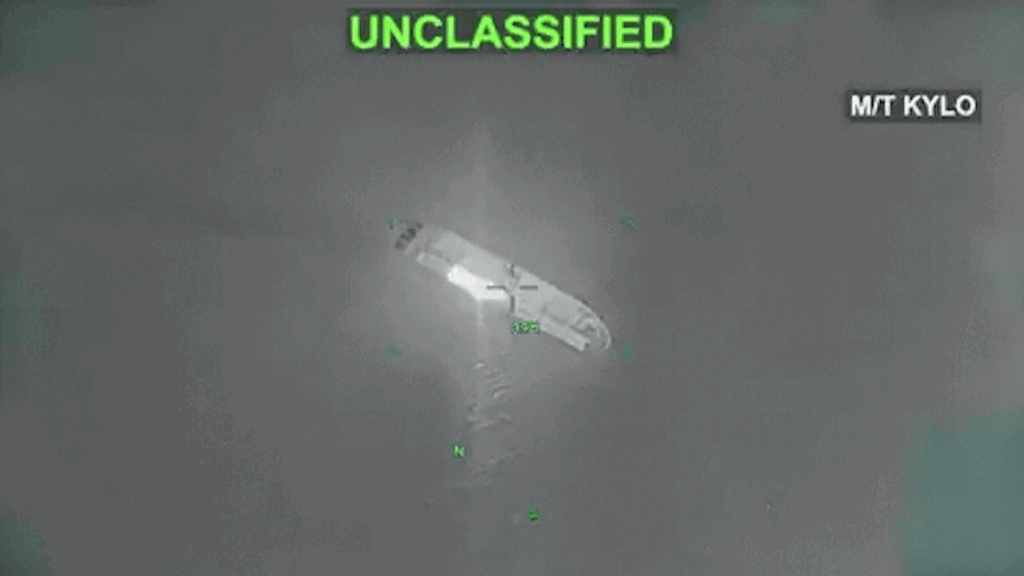
The Strait of Hormuz, a narrow but critically important waterway connecting the Persian Gulf to the Gulf of Oman and the Arabian Sea, has become a flashpoint in escalating tensions between the United States and Iran. Recent attacks on oil tankers around Hormuz have sparked fears of a full-scale conflict, with potentially catastrophic environmental consequences for the Gulf’s waters.
The Strait of Hormuz is one of the world’s most strategic maritime chokepoints, through which approximately one-fifth of global oil trade passes. Tankers carrying crude oil from the Gulf states navigate these waters daily, making security of the passage vital to global energy supplies.
However, rising hostility between the US and Iran, intensified since the US withdrawal from the Iranian nuclear deal and subsequent sanctions, has led to a surge in military incidents in the region. Iranian forces have increasingly targeted vessels they claim are violating their territorial waters, while the US has bolstered naval forces to attempt to maintain free navigation.
In this high-tension environment, attacks on oil tankers—whether direct strikes, mine explosions, or sabotage—have become alarmingly frequent. These attacks risk triggering massive oil spills that could devastate the fragile marine ecosystem of the Gulf, home to endangered species and vital fisheries that support millions of livelihoods.
Oil spills in the shallow and enclosed waters of the Gulf could spread quickly, contaminating coastlines, coral reefs, and mangroves. Cleanup and recovery would be difficult and prolonged due to the region’s hot climate and limited natural ventilation.
Environmental experts warn that an intensification of hostilities or an outright war could see multiple tankers damaged or sunk, releasing millions of gallons of crude oil into the water. The economic impact would also be severe, disrupting oil exports worldwide, raising fuel prices, and potentially destabilizing global markets.
Regional governments and international stakeholders face the urgent challenge of de-escalating tensions while ensuring that maritime navigation remains secure and environmentally sustainable.
Efforts to monitor tanker movements, enhance maritime security cooperation, and promote diplomatic engagement between the US and Iran are crucial to preventing further incidents in this geopolitically sensitive area.
The potential for a US-Iran war over Hormuz carries profound risks—beyond military conflict—to the health of the Gulf’s waters, regional economies, and global energy security. Vigilance and diplomacy remain essential to safeguarding this vital waterway from becoming a hub of conflict-induced environmental disaster.