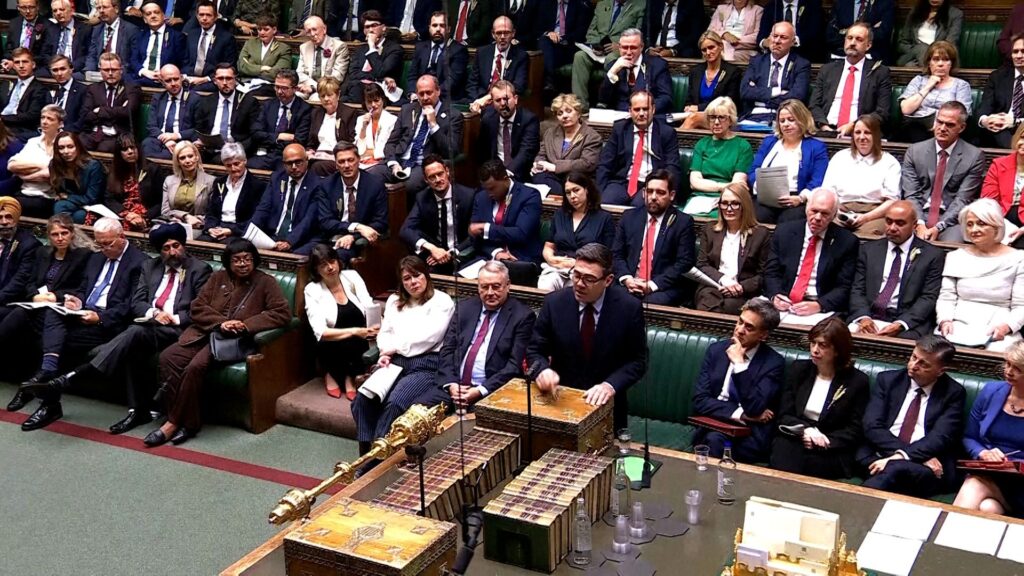
UK Prime Minister Andy Burnham has publicly justified the UK’s decision to ban trade with Israeli settlements located in the occupied West Bank. This move aligns with international concerns regarding the legality and ethical implications of commerce with settlements considered illegal under international law.
Burnham emphasized that the ban is consistent with the UK’s commitment to uphold international law and reinforce a just resolution to the Israeli-Palestinian conflict. He argued that trading with settlements undermines peace efforts and deteriorates prospects for a two-state solution.
The prime minister noted that the ban aims to prevent economic activities that could legitimize or support settlement expansion, which has been widely condemned by the international community, including the United Nations. He highlighted that this policy decision reflects the UK government’s stance that all settlements in the occupied territories are unlawful and an obstacle to peace.
Critics of the ban argue that it could impact diplomatic relations and complicate trade ties with Israel. However, Burnham countered by stating that the UK’s foreign policy prioritizes human rights and the pursuit of peace over short-term economic interests.
The policy has received support from various human rights organizations and advocates for Palestinian rights, who view it as a meaningful step towards addressing the injustices faced by Palestinians due to settlement expansion. It sends a clear message that economic engagement should not come at the cost of justice and legal principles.
Burnham also acknowledged the complexities involved in implementing the ban, including monitoring and enforcement challenges, but affirmed the government’s commitment to rigorously apply the policy. He underscored the importance of international cooperation and dialogue to ensure the measures contribute effectively to peace and stability in the region.
This development marks one of the most significant actions taken by the UK regarding Israeli settlements and reflects a growing international trend to take concrete steps against settlement-related economic activities. The ban is seen as part of a broader global effort to encourage Israel to halt settlement expansion and to foster conditions conducive to a negotiated peace agreement.
Overall, Prime Minister Burnham’s defense of the ban highlights the UK’s dedication to promoting international law and human rights, signaling a firm stance amidst a complex and long-standing geopolitical issue.