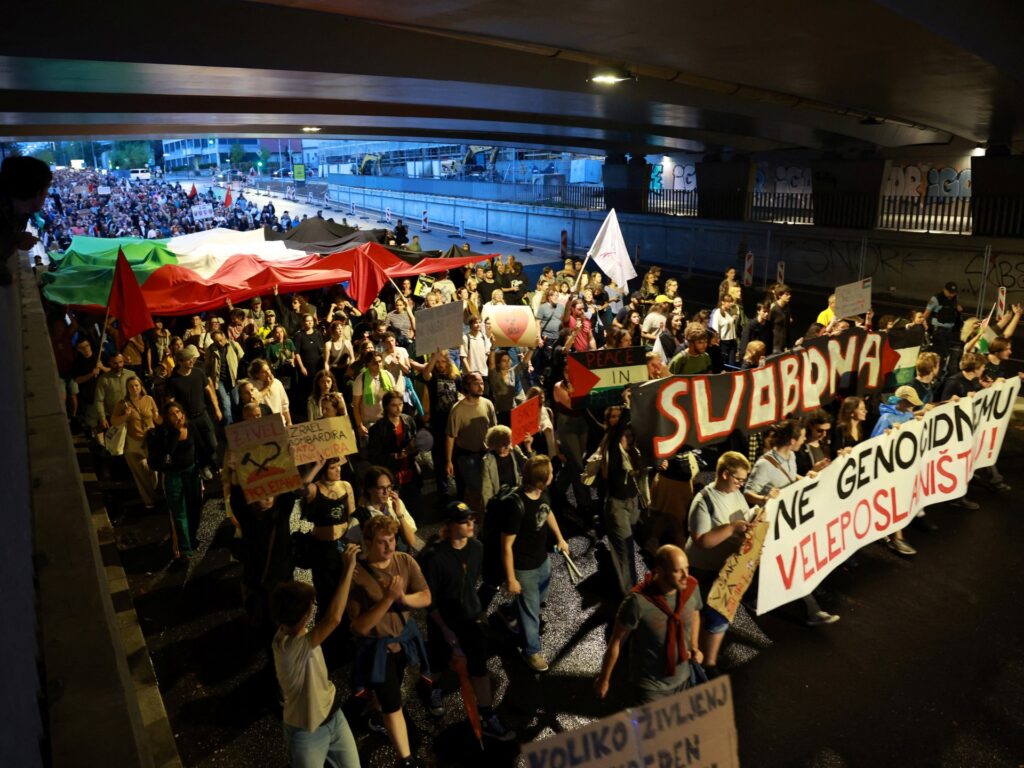
In a significant diplomatic move, Slovenia has officially opened Israel’s first embassy in Ljubljana, a step that has sparked widespread protests and heightened political tensions in the country. The decision comes under the administration of Slovenia’s nationalist Prime Minister Janez Jansa, known for his conservative stance and realignment of Slovenia’s foreign policy toward Israel.
Thousands of demonstrators took to the streets of Ljubljana, the capital city, to voice their opposition to the government’s decision. Protesters included a diverse mix of citizens, activists, and opposition party supporters who view the move as controversial and potentially detrimental to Slovenia’s international relations and domestic harmony. The protests were marked by chants, banners, and peaceful marches, drawing significant media attention both locally and internationally.
Prime Minister Janez Jansa’s reopening of diplomatic ties with Israel represents a strategic pivot in Slovenia’s foreign policy. This initiative marks the establishment of Israel’s first embassy in Slovenia, symbolizing strengthened bilateral relations between the two nations. For Jansa, this move is part of a broader effort to reset Slovenia’s alliances and assert a more pronounced nationalist and pro-Israel stance that aligns with his government’s conservative agenda.
However, the establishment of the embassy and Jansa’s diplomatic direction have not been without controversy. Critics accuse the Prime Minister of disregarding public opinion and fomenting division within Slovenian society. Opposition parties have leveraged the issue to rally support against the government, with some calling for an impeachment bid against Jansa, citing concerns over his handling of foreign policy and the lack of transparency surrounding the decision.
The impeachment proceedings reflect the growing political polarization in Slovenia, where debates over national identity, foreign relations, and democratic governance have intensified. Those advocating for impeachment argue that Jansa’s unilateral approach undermines democratic processes and the consensus needed for such significant diplomatic initiatives.
Despite the backlash, the Slovenian government maintains that opening the embassy is a crucial step forward. Officials emphasize the potential benefits of enhanced cooperation with Israel, including economic partnerships, technological exchange, and security collaborations. They argue that the embassy will serve as a bridge to new opportunities for Slovenia on the global stage.
The controversy surrounding Slovenia’s new embassy also highlights larger regional and international dynamics. The move aligns Slovenia more closely with Western powers supportive of Israel, amidst a complicated geopolitical landscape in Europe and the Middle East. It also aligns Slovenia with other Central European countries that have pursued similar diplomatic overtures toward Israel.
Public opinion remains deeply divided over the embassy opening. While some view it as a positive development that could boost Slovenia’s international influence and economic prospects, others fear it could alienate important partners and escalate regional tensions.
Experts note that the situation in Slovenia is emblematic of a broader trend where nationalistic governments recalibrate foreign policies to reflect ideological priorities, often leading to domestic unrest and political instability.
As protests continue and political debates rage on, the future of Slovenia’s embassy in Israel and the stability of Janez Jansa’s government remain uncertain. The unfolding events underscore the complexities faced by small nations navigating the intersection of national identity, international diplomacy, and domestic political challenges.