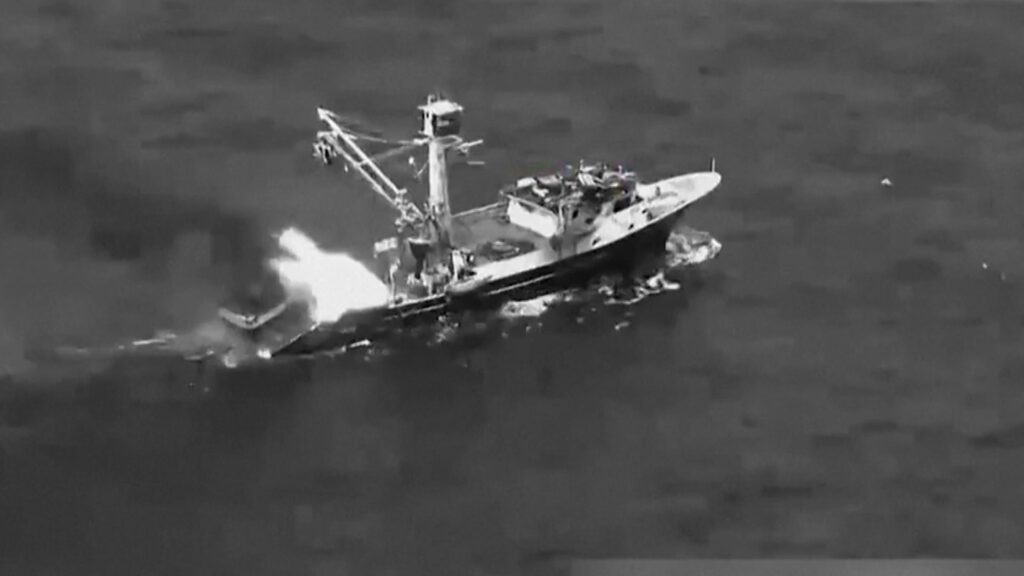
In a significant maritime operation, US forces have intercepted and subsequently sunk a vessel identified as a floating refueling station tied to a criminal gang from Ecuador. The operation took place in the eastern Pacific Ocean, where the US military engaged the vessel under circumstances related to combating organized crime.
Authorities revealed that the vessel was being used by the criminal gang to facilitate illicit activities, likely including drug trafficking and smuggling operations. Floating refueling stations like this are critical assets for criminal organizations, allowing their maritime vessels to operate farther from shore, thus evading law enforcement detection and extending their illicit reach.
The US military’s decision to sink the vessel underscores a proactive approach to disrupting transnational criminal networks operating in the vast Pacific maritime domain. The operation involved surveillance, tracking, and coordinated action to ensure the vessel was incapacitated without risking broader maritime safety.
This intervention is part of a larger effort to secure international waters and support regional law enforcement agencies in curbing the influence of criminal gangs that pose threats not only to Ecuador but to global maritime security. The US has been collaborating closely with Ecuadorian authorities and other international partners to monitor and combat maritime criminal activities including drug trafficking, human smuggling, and illegal fishing.
The US military did not disclose specific details about the tactical execution of the sinking or the exact location of the incident to maintain operational security. However, officials confirmed that no personnel losses occurred during the operation, and the action was a strategic measure to degrade the operational capabilities of the Ecuadorian gang.
Maritime security experts have lauded the US actions, noting that interdiction of floating refueling stations significantly hampers the logistical capabilities of criminal organizations. By cutting off their ability to refuel at sea, these groups face increased operational difficulties and higher risks of detection and arrest.
The US Navy and Coast Guard continue to prioritize maritime interdiction operations as part of their commitment to secure maritime routes vital to global commerce and regional stability. This latest incident reaffirms the ongoing challenges posed by criminal networks exploiting maritime environments and the necessity for continued vigilance and cooperation among nations.
Ecuadorian officials have expressed support for the US operation, recognizing the importance of international cooperation in managing transnational crime. The incident highlights the broader regional security challenge posed by criminal gangs that operate across borders and exploit the vastness of the Pacific Ocean.
Efforts to combat such maritime criminal networks include intelligence sharing, joint patrols, and coordinated law enforcement actions. The success of this operation against the floating refueling station is expected to have a chilling effect on similar networks and reduce illegal maritime activity in the region.
As investigations continue, US and Ecuadorian authorities are expected to work together to identify and dismantle the wider criminal network associated with the vessel. The incident serves as a reminder of the strategic importance of maritime security operations in preserving rule of law and ensuring safe passage through international waters.
With the Pacific Ocean serving as a major conduit for global trade and an area vulnerable to illicit activities, maintaining a strong maritime security presence remains a priority for the United States and its allies.
This recent sinking underscores the risks faced by criminal groups attempting to operate with impunity at sea and demonstrates the effectiveness of coordinated military and law enforcement responses in disrupting their operations.