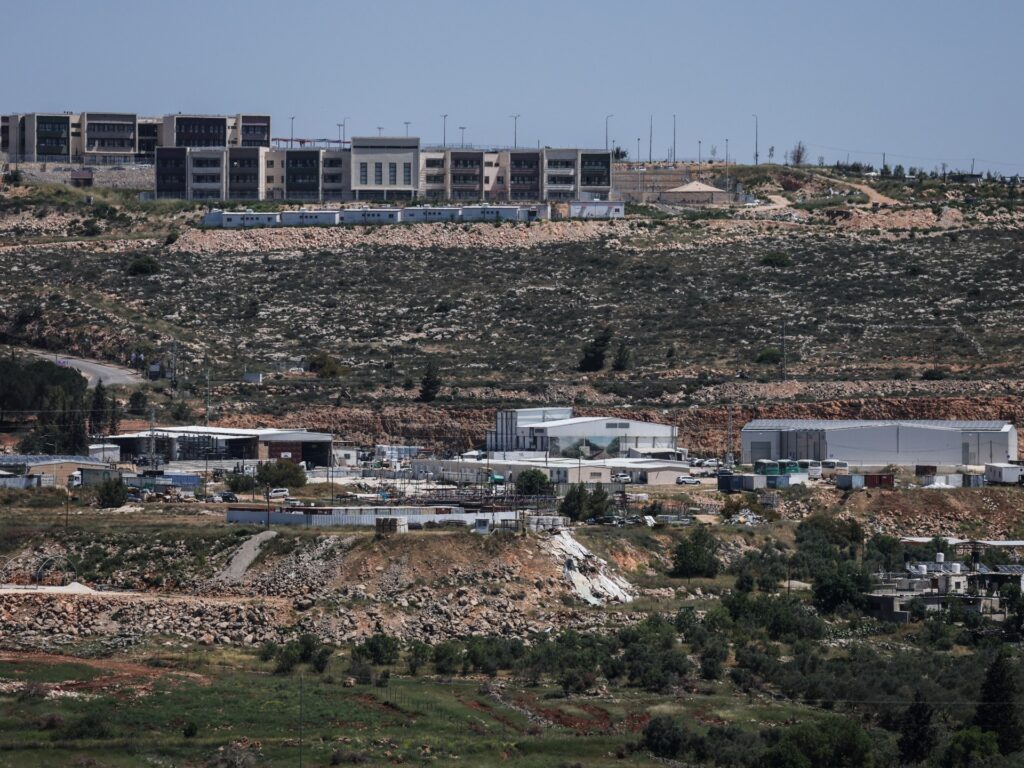
In a significant diplomatic move, the United Kingdom and France have joined ten other states in backing sanctions against illegal Israeli settlements located in the occupied West Bank. This collective decision reflects growing international condemnation of settlement activities that are widely regarded as violations of international law.
The UK government has announced plans to introduce an import ban on goods produced in these illegal settlements. This measure is designed to prevent settlement-made products from entering the British market, thereby exerting economic pressure to halt settlement expansion. The ban will be coordinated with other countries that share similar concerns about the legality and ethical implications of these settlements.
Israeli settlements in the West Bank have been a contentious issue for decades, fueling tensions in the Israeli-Palestinian conflict. The international community, through bodies like the United Nations, has repeatedly declared that settlements built on occupied Palestinian territory violate international law, particularly the Fourth Geneva Convention.
The 12 states endorsing sanctions represent a coalition committed to taking tangible steps to discourage settlement growth. By targeting the economic benefits derived from these territories, the coalition hopes to send a clear message supporting the rights of Palestinians and the pursuit of a peaceful resolution.
France, long an advocate for a two-state solution, views the support of sanctions as a means to uphold international legal standards and promote peace negotiations. The collaboration among these states symbolizes an increasingly coordinated approach to address complex geopolitical challenges in the Middle East.
The UK’s import ban will involve thorough evaluations to ensure that no goods originating from the settlements bypass restrictions. Authorities plan to enhance customs checks and improve trade transparency to enforce the ban effectively.
This initiative also signifies a notable shift in the UK’s foreign policy stance, emphasizing a more assertive role in upholding international law and human rights. The move has drawn varied reactions globally, with supporters hailing it as a courageous stand and critics warning of possible diplomatic fallout.
While the sanctions are not punitive towards Israel as a whole, they specifically target economic activities linked to settlements considered illegal under international law. This distinction aims to balance diplomatic relations while addressing the settlement issue firmly.
The coalition of states backing these measures includes countries from Europe and beyond, highlighting widespread concern about settlement policies and their impact on regional stability.
Experts suggest that economic measures like import bans might influence Israeli policies if sustained over time and coupled with broader diplomatic efforts. However, the effectiveness of such sanctions remains a topic of debate among analysts and policymakers.
The UK and France’s collaborative action sets a precedent for other nations to follow, potentially leading to expanded sanctions or other international mechanisms aimed at resolving long-standing conflicts.
Human rights organizations have welcomed the sanctions, emphasizing that they reflect an acknowledgment of the hardships faced by Palestinians living under occupation and the international community’s responsibility to act.
Critics of the settlements argue that illegal construction undermines the prospects for peace by entrenching divisions and creating facts on the ground that complicate negotiations.
As the UK prepares to implement its import ban, diplomatic dialogues are expected to intensify, with efforts to engage Israeli authorities and international partners in discussions to address the settlement issue more comprehensively.
This development is pivotal in the broader context of Middle East peace efforts and signals a renewed international focus on enforcing legal norms and human rights in conflict zones.
The evolving situation underscores the importance of coordinated international responses to geopolitical challenges and the role of economic tools in advancing diplomatic objectives.
With the United Kingdom and France taking the lead, the coalition aims to inspire further action and reinforce the global commitment to justice and peace in the region.