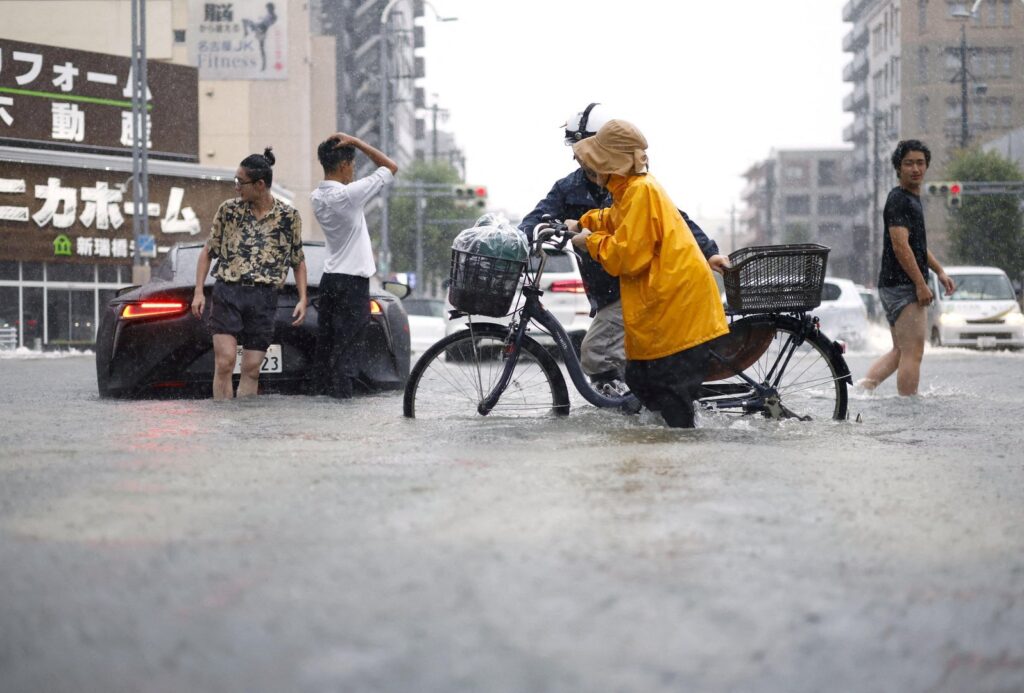
Nagoya, Japan, experienced unprecedented rainfall that has significantly disrupted daily life across the city. In a record-setting event, the city was drenched with an astonishing 105 millimeters of rain within just one hour, marking the highest volume of rain recorded in a single hour in Nagoya’s history.
This deluge has resulted in widespread challenges including flooding of streets, hampered transportation systems, and interruptions to daily activities for residents. The city’s infrastructure was put under severe stress, with drainage systems struggling to cope with the sudden and immense influx of water.
Emergency services were promptly deployed to assist affected neighborhoods, and local authorities issued warnings urging citizens to stay indoors and avoid non-essential travel. The heavy rainfall also led to delays and cancellations in public transportation, notably affecting bus routes and train schedules, thus complicating morning and evening commutes.
Meteorologists attribute the extreme rainfall to a combination of seasonal weather patterns and a particularly intense atmospheric system that stalled over the region. This weather event underscores concerns over increasing climate variability and the need for enhanced urban flood management strategies.
Residents have reported property damage including water ingress in homes and businesses, with some areas experiencing power outages due to flooding affecting electrical infrastructure. Cleanup operations are underway, but the extent of damage suggests a lengthy recovery process.
Local government officials have pledged to accelerate improvements in flood defenses and emergency preparedness to better protect Nagoya’s population in the future. As climate change continues to pose challenges, effective adaptation measures remain critical to minimizing the impact of such extreme weather events.
This unprecedented rainfall serves as a reminder of the vulnerability of urban centers to shifting weather extremes and the importance of resilient infrastructure and community readiness in facing environmental emergencies.