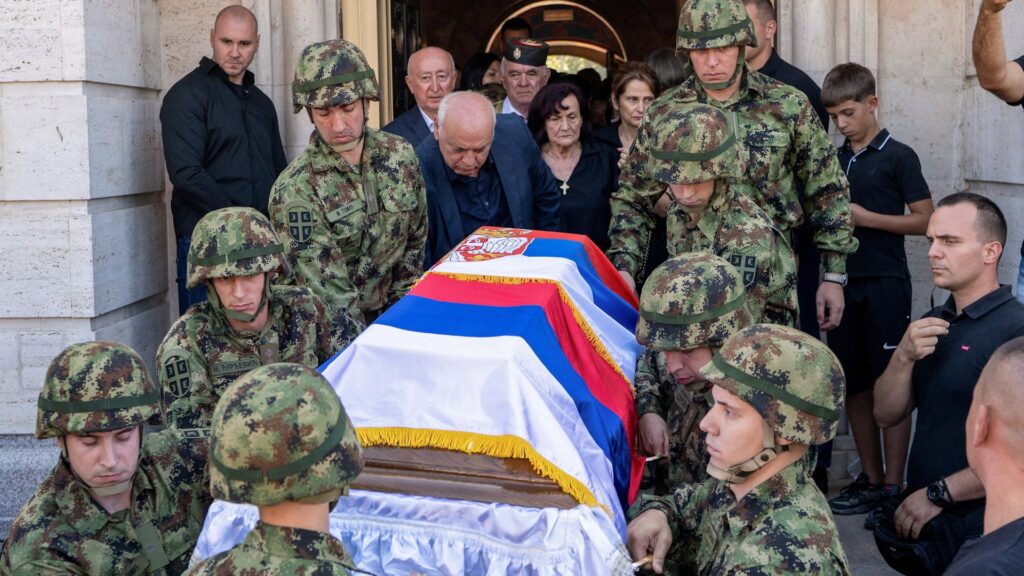
Thousands of people gathered to attend the funeral of Ratko Mladic, the convicted war criminal, in Serbia. Mladic, who was found guilty by the International Criminal Tribunal for the former Yugoslavia (ICTY) of numerous war crimes, including genocide during the Bosnian War, passed away recently, prompting a large public mourning event.
Ratko Mladic, often referred to as the “Butcher of Bosnia,” was a former Bosnian Serb military leader. He was sentenced to life imprisonment for his role in atrocities such as the Siege of Sarajevo and the Srebrenica massacre, where over 8,000 Bosnian Muslim men and boys were killed.
At the funeral held in Serbia, loyalists and nationalist supporters paid their respects, with many viewing him as a hero who defended Serbian interests during the turbulent 1990s Balkan conflicts. The event underscored the deep divisions and conflicting narratives that persist in the region regarding the legacy of the Yugoslav wars.
Authorities managed the event amid concerns about potential unrest, given Mladic’s controversial status. Security was heightened to prevent any incidents during the funeral proceedings.
International reactions to the funeral were mixed, with human rights organizations reiterating condemnations of Mladic’s actions and the importance of remembering the victims of war crimes to ensure accountability and reconciliation in the Balkans.
Mladic’s death and funeral have reignited discussions about war crimes accountability and the challenges in addressing historical grievances that continue to influence politics and inter-ethnic relations in the region. The funeral drew participants from across Serbia and some neighboring countries, demonstrating the enduring impact of Mladic’s legacy.
As Serbia continues its path towards European integration, the handling of figures like Mladic remains a sensitive and complex issue. The funeral served as a reminder of the need for continued dialogue, remembrance, and efforts toward peace and unity in the region.
The attendance of thousands at Ratko Mladic’s funeral highlights the ongoing divisions and unresolved tensions stemming from the Yugoslav wars of the 1990s, which continue to shape the political and social landscape of the Balkans today.