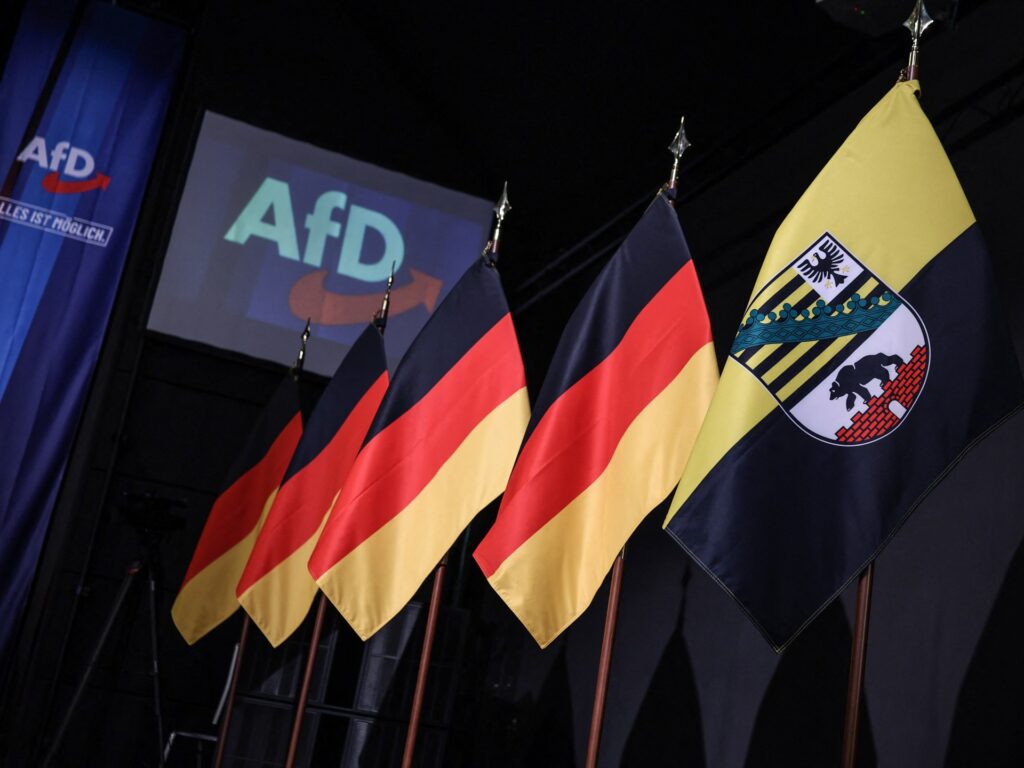
The recent victory of the Alternative for Germany (AfD) party in an east Germany state election has triggered significant international reactions, reflecting deep concerns about the implications for European politics and unity. The AfD, known for its nationalist and right-wing populist stance, has secured notable support in the region, a development that many view as a troubling shift in the political landscape.
In Paris, a French government minister described the AfD’s success as a “grave moment” for Europe, emphasizing the dangers posed by rising nationalism. The minister warned that the surge in nationalist sentiment could threaten the cohesion within the European Union, potentially undermining collective efforts on issues such as immigration, security, and economic cooperation.
The AfD’s rise is symptomatic of broader trends seen in various parts of Europe, where nationalist parties are gaining ground by capitalizing on public concerns over immigration, economic stagnation, and cultural identity. Observers note that this trend could lead to increased polarization across the continent, challenging the principles of liberal democracy and international cooperation.
Within Germany, the election outcome has sparked intense debate about the country’s direction. Supporters of the AfD argue that the party represents a necessary correction to policies they view as inadequate on immigration and integration. However, opponents caution that the AfD’s agenda risks fostering division and intolerance.
The European Union has faced multiple challenges recently, including Brexit, ongoing debates about fiscal policies, and the management of migration flows. The AfD’s electoral gains, therefore, add to the complexity of maintaining unity among member states.
Political analysts suggest that the AfD’s victory could influence upcoming elections in other German states and possibly at the national level. The party’s emphasis on nationalist themes resonates with segments of the electorate feeling left behind by globalization and rapid social change.
International observers are also monitoring how mainstream German parties will respond to this political shift. There is widespread expectation that traditional parties may need to reconsider their approaches to address voter concerns that have fueled the AfD’s rise.
The French minister’s remarks highlight a broader European anxiety about the resurgence of nationalism and its potential to erode decades of progress towards integration and peace on the continent.
As the situation develops, the world is watching closely to see how Germany and Europe as a whole will navigate the challenges posed by the changing political dynamics epitomized by the AfD’s electoral success.