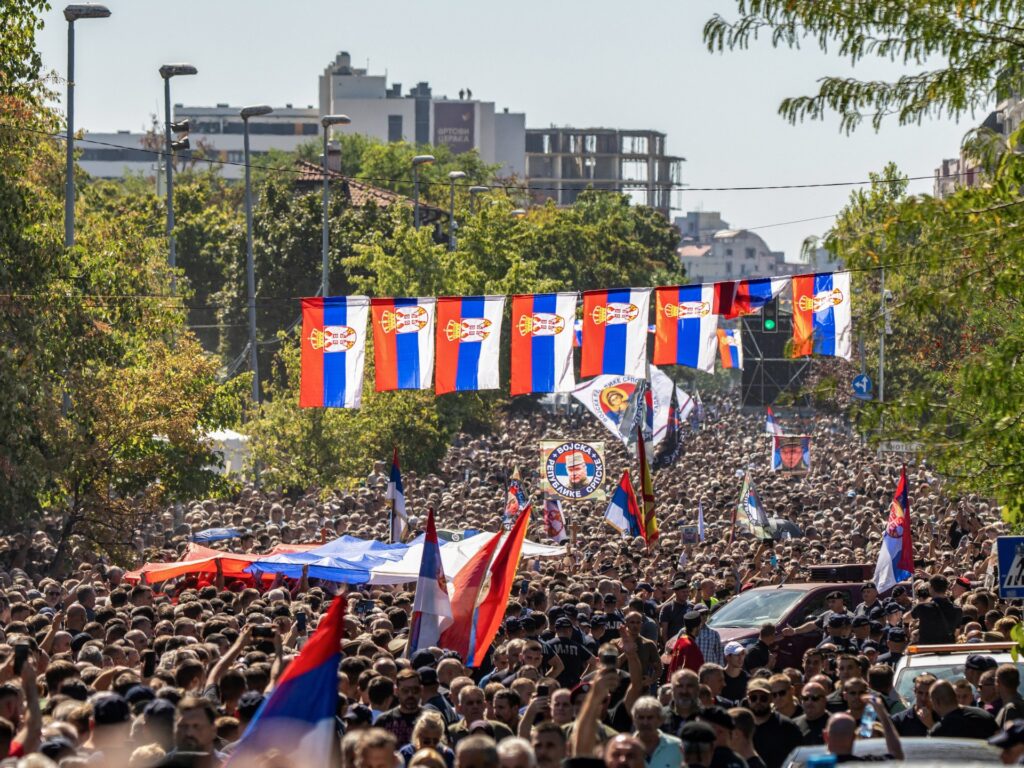
Thousands gathered in Belgrade to attend the funeral of Ratko Mladic, the former Bosnian Serb army general convicted of orchestrating the Srebrenica genocide. Mladic, who was sentenced to life in prison for war crimes, crimes against humanity, and genocide during the Bosnian War, was given a ceremony in his hometown that many in the international community view as highly controversial.
Mladic’s burial drew large crowds, including staunch supporters who regard him as a hero and a defender of Serbs during the 1990s conflict. The event underscored the deep divisions in Serbia over the legacy of the Bosnian War and the international war crimes tribunal’s rulings.
Supporters praised Mladic as a patriot, while critics condemned the funeral as glorifying a perpetrator of one of Europe’s worst atrocities since World War II. The Srebrenica massacre, where more than 8,000 Bosniak men and boys were killed in 1995, has been widely recognized as genocide by international courts.
Serbian officials maintained a delicate stance, balancing domestic nationalism with international pressures to acknowledge the convictions. The funeral became a focal point for nationalist sentiment, attracting flags, banners, and speeches that emphasized Serbian pride and defiance.
International reactions were swift and critical. The United Nations and various human rights organizations expressed concern that the hero’s burial undermines reconciliation efforts in the Balkans and sends a troubling message about accountability for war crimes.
Despite global condemnation, the funeral highlighted the persistent narrative within some Serbian communities that view Mladic’s actions in the war as justified defense rather than criminal acts. This division continues to challenge peace and unity in the region.
Mladic’s death and subsequent burial spark renewed dialogue about confronting difficult histories and the role of memory and justice in post-conflict societies. The event serves as a stark reminder of unresolved tensions and the complex legacy of the Yugoslav wars.
As Serbia moves forward, the international community urges greater commitment to acknowledging past atrocities and fostering reconciliation, emphasizing the importance of upholding human rights and rule of law. The burial ceremony, attended by thousands, reflects both the enduring impact of Mladic’s actions and the ongoing struggle over historical narrative and justice in the Balkans.