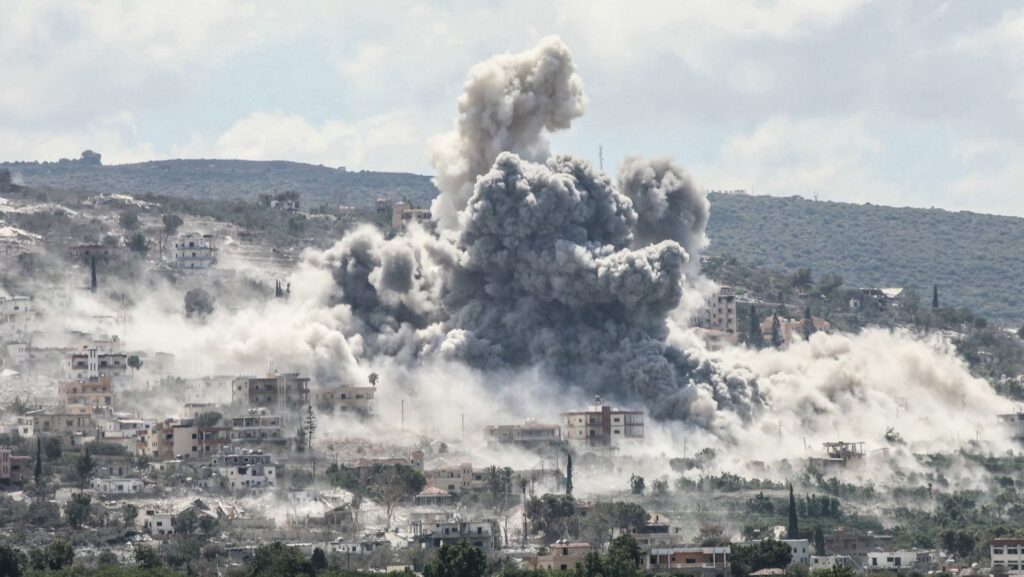
Tensions have escalated once again in southern Lebanon as the Israeli army launched bombardments on several villages in the region, an act that has raised serious concerns over the stability and observance of the ceasefire agreement reached earlier in June. This recent military action by Israel marks a significant violation of the ceasefire deal, which was intended to halt hostilities and restore peace along the Lebanon-Israel border.
According to reports from local sources, Israeli forces targeted multiple towns, causing extensive damage and displacing residents. The exact number of villages impacted remains uncertain, but witnesses describe scenes of destruction and a sudden surge of fear among civilians. The bombardment not only caused physical destruction but also exacerbated the humanitarian situation in the already volatile region.
The ceasefire agreement, brokered in June, aimed to bring an end to years of conflict characterized by intermittent clashes and exchanges of fire. It included provisions designed to prevent military escalation and promote dialogue between the parties involved. However, the recent attacks by the Israeli army clearly contravene the terms, undermining efforts to achieve lasting peace.
Official statements from the Israeli military have not provided a detailed explanation for the recent strikes, which some analysts speculate may reflect underlying strategic objectives or responses to perceived threats. Meanwhile, Lebanese officials have condemned the actions, calling for immediate cessation of hostilities and adherence to the ceasefire terms.
The international community has expressed alarm over the deteriorating security situation in southern Lebanon. Various governments and diplomatic bodies urged both Israel and Lebanon to exercise restraint, emphasizing the need to maintain the ceasefire to prevent further destabilization that could have broader regional consequences.
Human rights organizations have also voiced concern regarding the impact of the bombardment on civilians, many of whom have already endured prolonged suffering from past conflicts. The destruction of homes and infrastructure not only disrupts daily life but also hampers access to essential services such as healthcare and education.
This recent escalation underscores the fragility of peace efforts in the Middle East and highlights the ongoing challenges in enforcing ceasefire agreements in areas prone to conflict. As the situation evolves, calls for renewed diplomatic engagement and dialogue between Israel and Lebanon grow louder, with hopes that a more sustainable resolution can be achieved.
In summary, the Israeli bombardment of southern Lebanese villages represents a direct breach of the ceasefire agreement from June, escalating tensions and threatening the fragile peace in the area. The international community continues to monitor developments closely, advocating for immediate measures to halt violence and promote reconciliation between the conflicting parties.