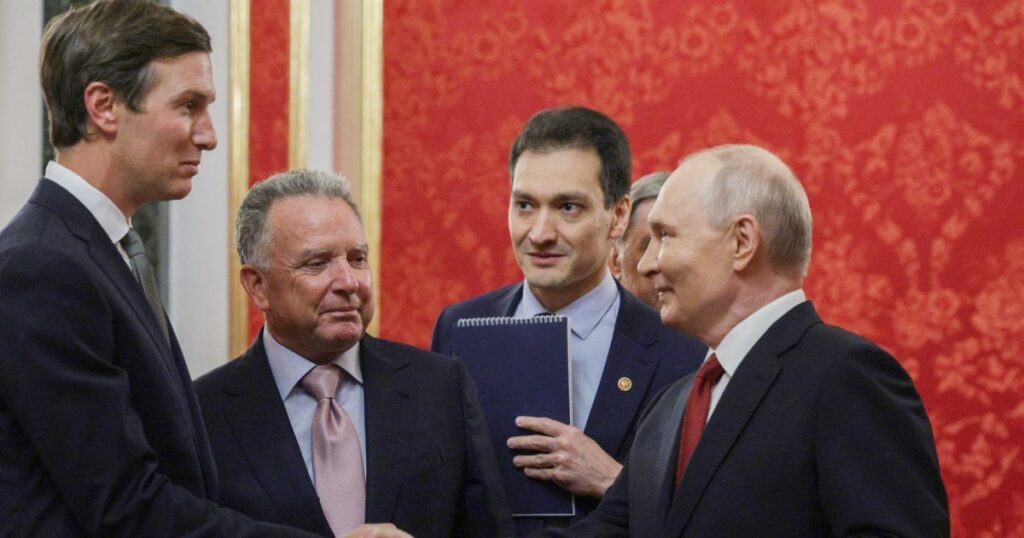
In a significant diplomatic development, Russian President Vladimir Putin held talks with US envoys to discuss a proposal put forward by former US President Donald Trump aimed at ending the ongoing war in Ukraine. The discussions took place amidst a fragile but hopeful peace initiative, as both Russia and Ukraine have agreed to a temporary ceasefire, refraining from striking each other’s capitals for three days during ongoing talks in Moscow and Kyiv.
The conflict between Russia and Ukraine, which erupted in 2014 and escalated dramatically in 2022, has led to widespread devastation, loss of lives, and geopolitical tensions. Various international efforts to mediate peace have so far struggled to produce lasting results.
The recent meetings signify a renewed push for dialogue, with Trump’s proposal focusing on ceasefire conditions, territorial considerations, and steps towards a diplomatic resolution. While details of the proposal remain confidential, sources indicate it emphasizes mutual respect for sovereignty and security assurances for both nations.
During the talks held in Moscow, President Putin engaged with US envoys, reflecting Russia’s willingness to explore diplomatic channels, albeit cautiously. Simultaneously, Ukraine’s government representatives participated in parallel discussions in Kyiv, underscoring the importance of bilateral engagement.
The agreed three-day truce to avoid targeting each other’s capitals marks a rare moment of restraint and offers a window of opportunity for negotiations to progress. This temporary ceasefire is seen by analysts as a critical confidence-building measure that could pave the way for more substantive peace talks.
The international community has responded positively to these developments, expressing hope that they could lead to a broader ceasefire and eventual resolution. However, experts caution that longstanding mistrust and complex geopolitical interests will challenge sustained peace efforts.
Both Russia and Ukraine face significant internal and external pressures, with domestic audiences expecting firm leadership and international stakeholders concerned about regional stability. In this context, the US envoys’ involvement signals Washington’s continued influence and interest in facilitating an end to the conflict.
The next steps involve further diplomatic engagements, monitoring of the ceasefire adherence, and potentially expanding negotiation frameworks to include other key players. The situation remains fluid, with all parties aware that lasting peace demands compromises and sustained commitment.
As the temporary ceasefire unfolds, the eyes of the world remain on Moscow and Kyiv, hopeful that this moment of dialogue can lead to a pathway beyond conflict towards reconciliation and rebuilding.