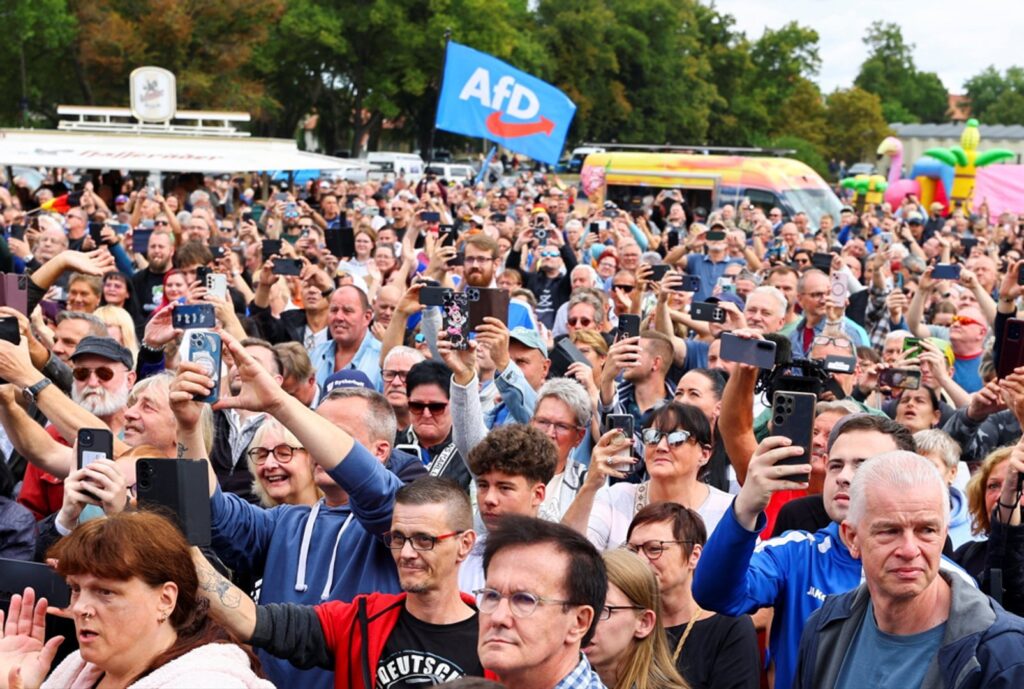
Germany’s far-right Alternative for Germany (AfD) party is on the verge of making history by potentially taking power in one of the country’s 16 federal states for the first time. This development represents a significant shift in the German political landscape, as the AfD, known for its nationalist and anti-immigration stance, has previously been excluded from government coalitions in the country.
The state election, held recently, has projected the AfD to gain enough seats to either lead or play a key role in forming the government. This would mark the first time since the party’s inception that it could hold executive power at the state level.
The AfD has gradually increased its influence since its founding in 2013, capitalizing on public discontent over immigration policies, economic concerns, and distrust of established political parties. Despite being labeled as far-right and facing criticism from many quarters for its controversial positions, the party has managed to secure a significant voter base.
In this state election, the AfD’s campaign focused on themes of national identity, stricter immigration controls, and criticism of the European Union. This resonated with a segment of voters, especially in areas experiencing economic challenges or who feel left behind by globalization.
Political analysts note that the AfD’s rise reflects broader trends seen across Europe, where populist and nationalist parties have gained support amid social and economic uncertainties. However, this projected victory has raised concerns among other political parties, civil society groups, and international observers about the implications for democratic values and social cohesion in Germany.
The potential entry of the AfD into state-level government could lead to policy shifts, particularly in areas related to immigration, law enforcement, and education. It also challenges the traditional dominance of the center-right and center-left parties in German politics.
Opposition parties have vowed to monitor the AfD’s governance closely and defend democratic norms. The federal government has also indicated vigilance in ensuring that democratic checks and balances remain robust.
Public reaction has been mixed, with supporters seeing the AfD’s advance as a long-overdue correction to the political establishment, while opponents warn of the dangers posed by extremist ideologies gaining official power.
As Germany grapples with this unprecedented political development, the world watches closely, recognizing the potential ramifications for Europe’s largest economy and the broader European Union.
The AfD’s quest for power in this state election is not just about regional politics; it symbolizes a pivotal moment in Germany’s post-war history, testing the resilience of its democratic institutions and the society’s commitment to pluralism and tolerance.