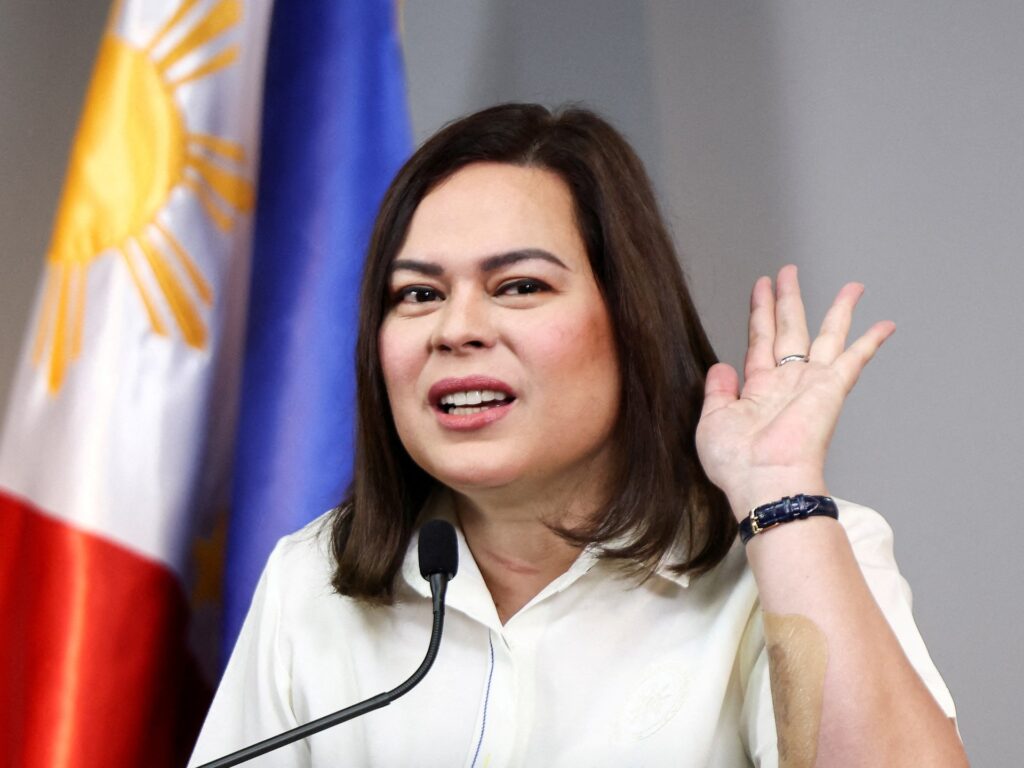
In a significant legal development in the Philippines, a court has issued an arrest warrant against Vice President Sara Duterte following serious allegations that she threatened to have President Ferdinand Marcos Jr., his wife, and a cousin killed by a hitman. This unprecedented case has drawn widespread attention due to the high-profile figures involved and the gravity of the accusations.
The charges stem from an incident in which Duterte allegedly made threats with the intent to orchestrate the assassination of the President and his close family members. The warrant was issued after prosecutors found enough evidence to proceed with the accusation of serious threats, a criminal offense under Philippine law.
Sara Duterte, known for her strong political presence and as the daughter of former President Rodrigo Duterte, has not yet been apprehended following the issuance of the warrant. Her legal team has yet to release an official statement regarding the charges or the subsequent warrant.
President Marcos Jr. and his administration have remained relatively silent on the matter publicly, though sources close to the presidency acknowledge the ongoing judicial process is being respected and followed meticulously.
The case has sparked a broad conversation in the Philippines about political discourse and the extent of legal consequences for threats against government officials. Legal experts highlight that while political disagreements are part of a democratic society, the use of violent threats crosses legal boundaries and must be addressed seriously.
Political analysts speculate that this case could have lasting impacts on the country’s political landscape, possibly affecting alliances and rivalries ahead of upcoming elections. The public reaction is mixed, with some expressing concern about escalating political tensions and others calling for justice and adherence to the rule of law.
This legal action marks a rare moment where a sitting Vice President is facing criminal charges connected to actions against the sitting President. It underscores the complex and sometimes volatile nature of Philippine politics.
As the situation develops, all eyes remain on the judicial proceedings and any forthcoming statements from the involved parties. The outcome could set important precedents regarding political accountability and the limits of permissible conduct for public officials in the Philippines.