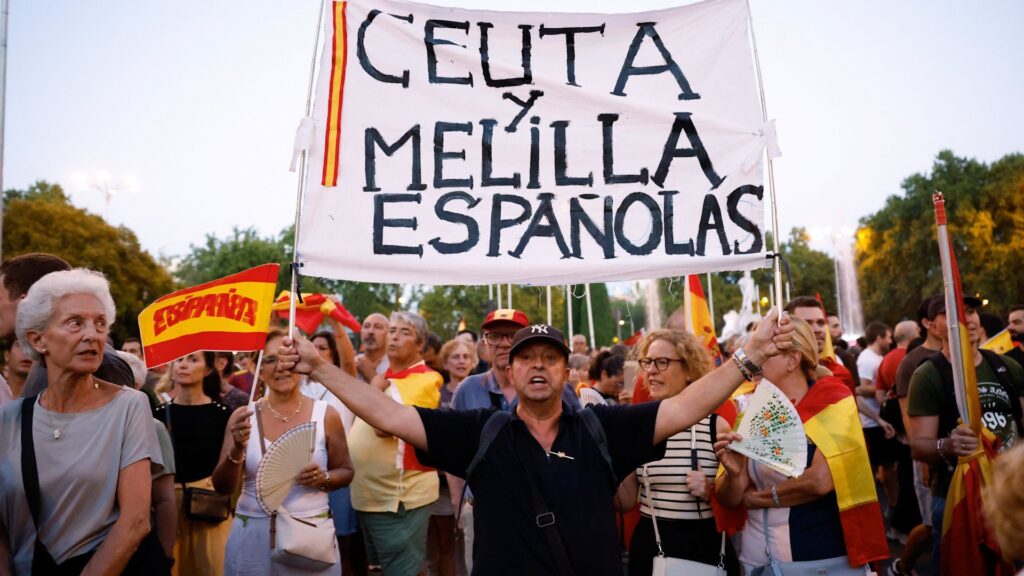
Tens of thousands of people gathered in cities across Spain in a series of large-scale protests, voicing their discontent with the government’s management of the migrant crisis in Ceuta. The protests reflect growing frustration among citizens regarding the influx of migrants and the handling of border security by Spanish authorities.
Ceuta, a Spanish enclave on the northern coast of Africa bordered by Morocco, has seen a significant surge in migrants trying to enter Europe, leading to a tense humanitarian and security situation. The sudden increase in arrivals has put pressure on local infrastructure and sparked political debate at the national level.
Demonstrators accused the government of lacking effective measures to control the borders and criticized the insufficient support for regions like Ceuta, which bear the brunt of migration flows. The protests included a wide spectrum of groups, from local residents and migrant advocates to political organizations and unions.
Many participants called for stronger border control policies to manage migration more effectively, while some also urged for a more humane approach to the immigrants who risk dangerous journeys seeking better opportunities.
Spanish officials have been under scrutiny both domestically and internationally, facing pressure to balance humanitarian responsibilities with national security concerns. The crisis has also strained diplomatic relations with Morocco, as discussions continue over collaboration on migration management.
The rallies across Spain symbolize a pivotal moment in the ongoing debate over immigration, national identity, and the responsibilities of the government. As the situation in Ceuta remains complex and fluid, the Spanish government is expected to face continuing demands for transparency, accountability, and comprehensive policy reforms.
These demonstrations underscore the importance of addressing root causes of migration, improving border management, and ensuring support for affected communities. The Ceuta crisis thus continues to be a flashpoint, highlighting broader challenges faced by Spain and Europe regarding migration and integration policies.