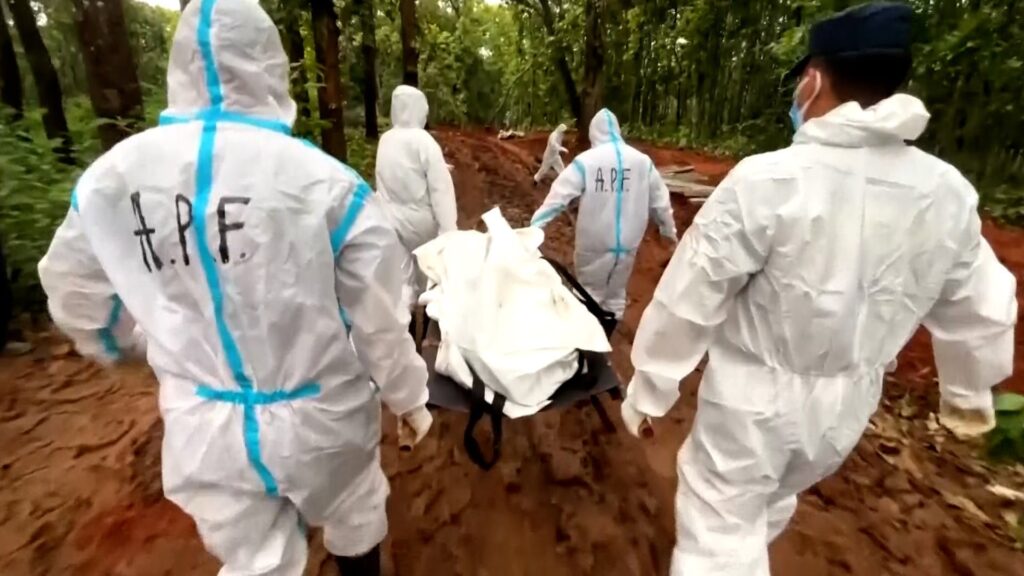
Nepal is currently facing a heartbreaking situation as authorities begin burying victims of recent floods who remain unidentified. The devastating floods have wreaked havoc across the country, leading to numerous fatalities and widespread destruction.
Many families are still waiting anxiously for news about their loved ones, hoping for answers that have yet to come. The scale of the disaster has overwhelmed emergency responders and authorities, complicating the identification process for those who lost their lives.
The government’s decision to bury the unidentified victims in temporary graves comes out of necessity, as managing the sheer number of flood victims has become a critical challenge. The temporary graves are located in designated areas to provide some semblance of order and dignity to those who perished.
Officials emphasize that identification efforts will continue alongside the ongoing burial process. DNA tests, fingerprinting, and other forensic methods are being utilized to try to ascertain the identities of the flood victims.
Humanitarian organizations working on the ground report that many families are living in uncertainty and grief, without closure about the fate of their relatives. This emotional toll is compounded by the disruption of daily life, loss of homes, and destruction of infrastructure owing to the floods.
Local communities have rallied to support the victims’ families and help in relief efforts. Volunteers are assisting with distributing aid and helping authorities conduct search operations in flood-ravaged areas.
Despite these tremendous challenges, Nepal is trying to rebuild and recover from the disaster. The government is coordinating with international aid agencies to provide resources for rehabilitation and reconstruction.
The tragic situation underscores the urgent need for improved disaster preparedness and response mechanisms in Nepal. Lessons learned from this calamity are likely to influence future efforts to protect vulnerable populations against natural disasters.
As efforts continue, families and communities hold onto hope that answers will come soon, and that their loved ones’ final resting places will be known and honored properly.
The ongoing floods are a stark reminder of the vulnerability of populations affected by climate change and extreme weather patterns, highlighting the importance of global cooperation to mitigate such disasters.
Nepal’s story is one of struggle, resilience, and the search for hope in the wake of tragedy. The world watches as the country navigates this difficult period, striving to heal and rebuild from the devastating floods.