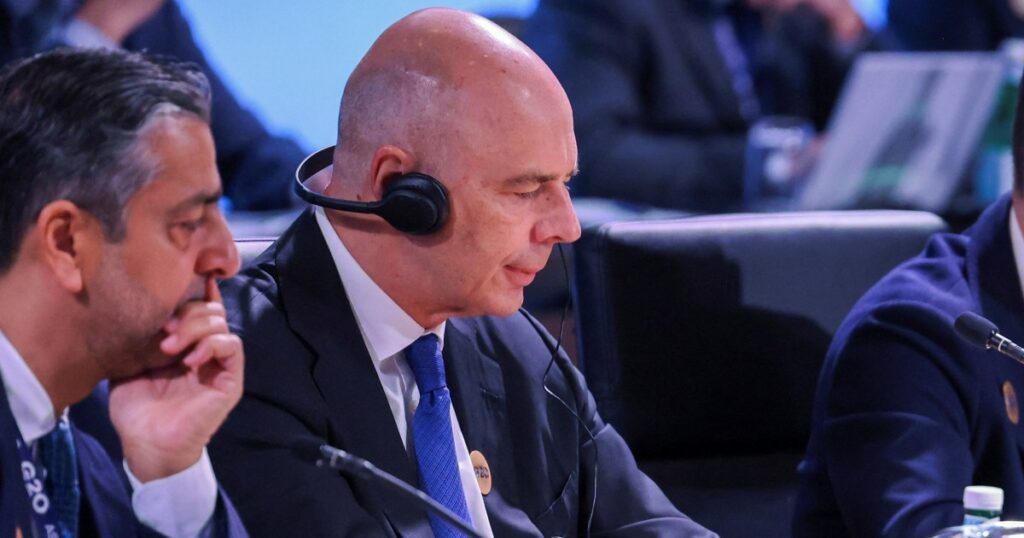
In a recent and controversial move, the United States has reinstated Russia’s Finance Minister Anton Siluanov to participate in the G20 finance talks. This decision has sparked notable discontent among European officials, who have expressed strong objections to Russia’s renewed involvement in these high-level economic discussions.
Anton Siluanov, a key figure in Russia’s economic and financial policymaking, had been sidelined in previous talks due to geopolitical tensions and conflicts involving Russia. His reentry into the G20 platform marks a significant shift in diplomatic and economic engagements amid ongoing global challenges.
The G20, an international forum that brings together the world’s major economies, addresses critical issues including global financial stability, economic growth, and international trade. Russia’s participation in these talks is considered vital by some due to its large economy and influential role in global markets. However, others view the move with skepticism, pointing to broader political controversies and conflicts.
European officials have voiced concerns that Russia’s return to the talks could undermine unified responses to geopolitical crises, especially those involving Russian actions in Eastern Europe. They argue that including Russia at this level without addressing these issues risks legitimizing policies they consider aggressive or destabilizing.
The United States, for its part, has defended the decision as pragmatic, emphasizing the importance of dialogue and cooperation in maintaining global economic stability. U.S. officials highlight that excluding Russia from these discussions could limit the effectiveness of international financial policymaking and the ability to coordinate responses to global economic challenges.
During recent meetings, Siluanov engaged directly with his U.S. counterpart, fostering a platform for dialogue amid tensions. These discussions were seen as efforts to bridge divides and focus on shared economic interests despite broader political disagreements.
The reaction among European nations underscores the complex dynamics of international relations, where economic cooperation often intersects with deep-seated political conflicts. The G20 forum itself remains a delicate balancing act, striving to include all critical voices while managing the repercussions of ongoing disputes.
Critics of Russia’s involvement in the G20 talks caution that this reintegration could diminish pressure on Russia to alter contentious policies and question the commitment of other members to uphold sanctions or diplomatic stances previously agreed upon.
Supporters argue that ongoing engagement is essential for addressing global financial issues such as inflation, supply chain disruptions, and coordinated responses to crises like climate change and pandemic recovery.
As the situation develops, the international community is watching closely to see how this decision will impact both the immediate outcomes of the G20 talks and longer-term geopolitical relationships.
In summary, the U.S. move to bring Anton Siluanov back into the G20 finance talks reflects a broader strategy of engagement and dialogue but has ignited a debate over the balance between economic pragmatism and political principles. The episode highlights the complexities faced by global institutions in navigating cooperation amidst conflict, and the ongoing tensions that shape the global economic landscape.