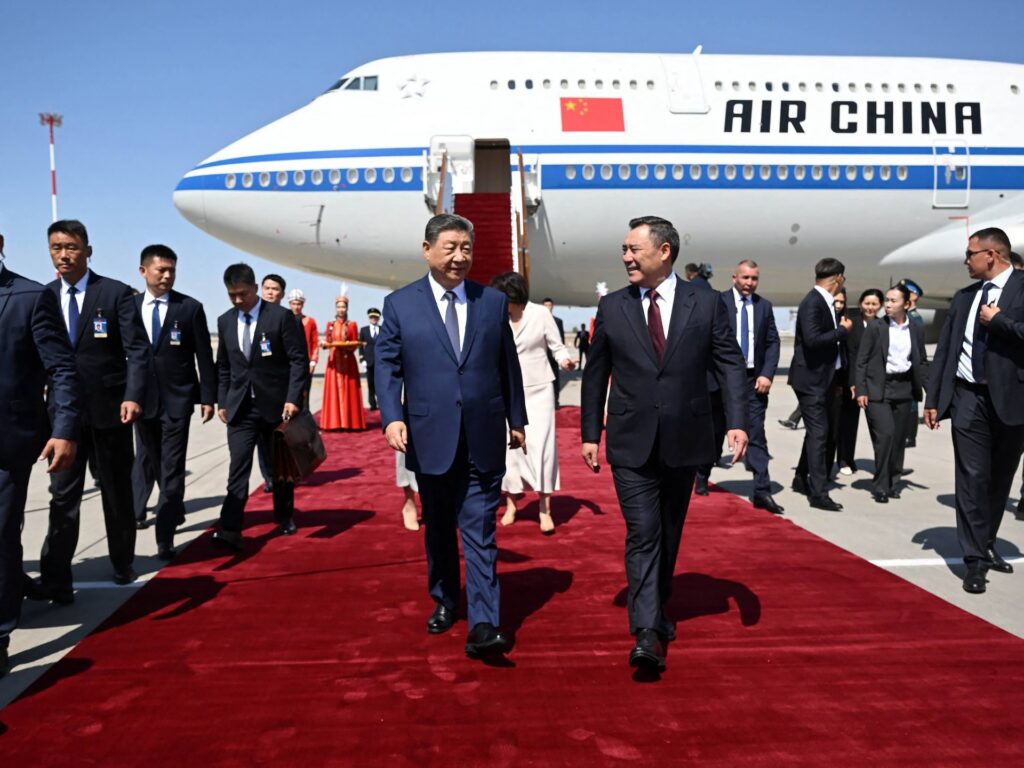
The upcoming Shanghai Cooperation Organisation (SCO) summit is set to witness a significant meeting between the leaders of Russia and China. The SCO, an influential regional organization, while not officially designated as anti-Western, has increasingly become a platform where Russian and Chinese leaders amplify their geopolitical worldview, often positioning themselves in contrast to Western policies.
Founded in 2001, the SCO originally sought to promote regional security, economic cooperation, and cultural exchange among member states spanning Central Asia and parts of Asia. The organization includes major powers such as Russia, China, and several Central Asian nations, consolidating a substantial geopolitical bloc.
The summit marks a critical juncture for the SCO as global tensions involving Russia, China, and Western countries continue to escalate. Leaders from Russia and China are expected to use their time at the summit to reaffirm their strategic partnership and coordinate on issues ranging from security, economic initiatives, to responses to Western sanctions.
The SCO’s agenda at the summit will likely encompass regional stability, counterterrorism efforts, trade facilitation, and infrastructure development. The emphasis on security cooperation resonates strongly with Russia and China’s mutual concerns over sovereignty and influence in their neighboring regions.
Observers note that while the SCO does not explicitly oppose Western nations, the messaging emerging from Russia and China at these gatherings often reflects a desire to challenge Western dominance in global affairs. This is evident in their critiques of U.S. foreign policy and NATO’s expansion, as well as their push for alternative international institutions and economic frameworks.
Economically, China’s Belt and Road Initiative (BRI) is an essential thread in the SCO’s discussions, as many member states lie along the BRI corridors. Russia’s interest in maintaining influence over Central Asian states and ensuring stability to its south makes this partnership vital.
The summit also coincides with a period of intensified sanctions on Russia by Western countries following its actions in Ukraine. China’s role in this context often involves providing economic support and diplomatic backing to Russia, reinforcing a Eurasian axis of influence that counters Western policies.
In summary, the SCO summit represents a stage where Russia and China not only bolster their bilateral ties but also promote a broader Eurasian vision that seeks to reshape global power dynamics. This meeting is emblematic of a strategic shift, signaling the increasing importance of multilateral organizations outside Western-led institutions.
The summit’s outcomes may influence international relations in the coming years, charting a course for collaboration that challenges existing global governance models and underscores the evolving landscape of 21st-century geopolitics.