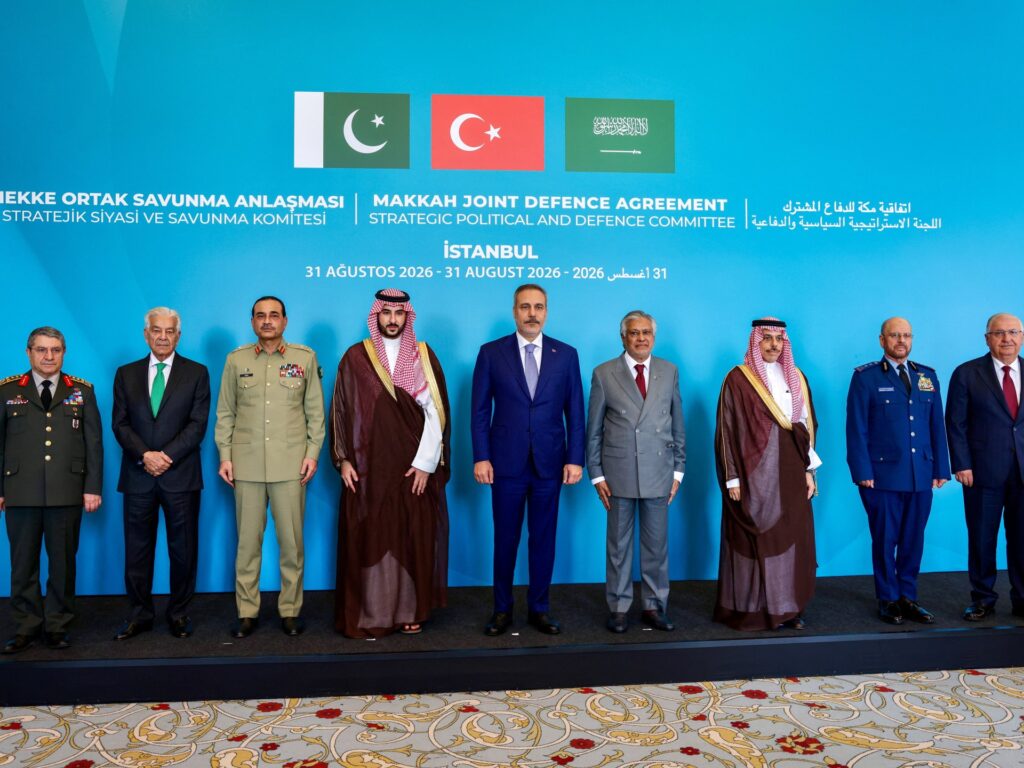
The recent meeting between Pakistan, Saudi Arabia, and Turkiye marks a significant milestone in regional security dynamics, highlighting their commitment to a trilateral defense pact that could reshape strategic alignments amid escalating US-Iran conflicts. This trilateral alliance is seen as a response to the increasing instability driven by resumed strikes and tensions between the United States and Iran, which have reignited concerns about broader regional security in the Middle East and South Asia.
The leaders of the three nations convened to evaluate the effectiveness of their pact, stressing the necessity for enhanced military cooperation, intelligence sharing, and joint exercises. The goal is to create a robust framework that can deter external aggression and promote peace in their respective regions. This pact transcends a mere military alliance; it embodies a broader geopolitical strategy aiming to balance power and influence amid the shifting global landscape.
Pakistan, with its strategic location and significant military capabilities, plays a crucial role in bridging South Asia with the Middle East. Saudi Arabia, a key oil powerhouse and political heavyweight, brings considerable economic and military resources to the table. Turkiye’s position as a NATO member with a versatile yet assertive foreign policy offers a critical linkage to both Western alliances and regional Muslim-majority countries.
The countries intend to focus on joint defense production and technology sharing, enhancing their indigenous capabilities to reduce dependence on external powers. These measures are expected to strengthen their collective defense posture and ensure rapid response capabilities against any emerging threats.
Analysts have noted that the pact might invite participation from other regional players who share common interests in stability and security but are wary of the US-Iran confrontation’s spillover effects. Potential candidates include Gulf Cooperation Council (GCC) members like the United Arab Emirates and Qatar, along with Jordan and Egypt, which have traditionally maintained strong defense ties with Saudi Arabia and Turkiye.
The resurgence of US-Iran strikes has exposed vulnerabilities in regional security, compelling these nations to seek new alliances. Their meeting results underscore an ambition to construct a multi-layered deterrence strategy that can operate independently of great power interventions.
Significantly, the pact also addresses non-military threats, including terrorism, cyber threats, and economic sabotage, reflecting a modern understanding of comprehensive security. By pooling resources, expertise, and strategic outlooks, these countries aim to foster resilience against asymmetric threats that have increasingly destabilized the region.
Despite these positive developments, challenges remain. Differing national interests, historical rivalries, and external pressures could complicate deeper integration. Moreover, the international community, particularly the US and Russia, will monitor these developments closely, as the pact could influence their policies in the region.
In conclusion, the Pakistan-Saudi Arabia-Turkiye defense pact represents a proactive and calculated approach to regional security challenges amplified by US-Iran tensions. Its future trajectory will likely involve expanding membership, enhanced military and technological collaboration, and a broader security agenda extending beyond traditional military concerns. This evolving alliance underscores the shifting patterns of geopolitical cooperation in a region critical to global stability and energy security.