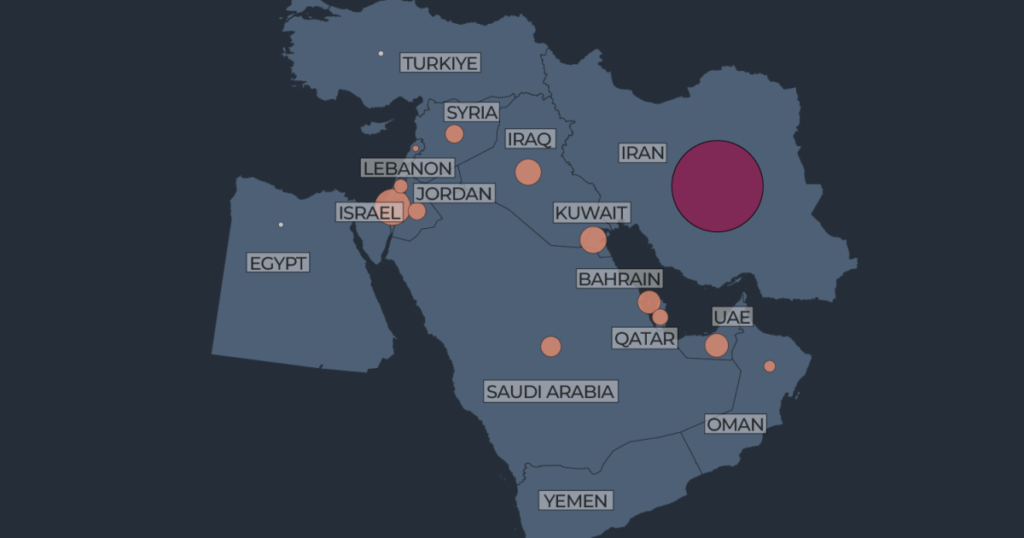
As the US-Israel conflict with Iran enters its sixth month, the world watches closely, grappling with the far-reaching consequences of this prolonged war. Al Jazeera has meticulously tracked the multifaceted impact of the conflict, offering a comprehensive look at the human, economic, and geopolitical toll through key statistics and figures.
Human Cost:
The human toll of the conflict has been staggering. In six months, thousands have lost their lives, encompassing combatants and civilians caught in the crossfire. The death toll has risen steadily, with estimates indicating over 10,000 fatalities. Additionally, millions have been displaced internally, while hundreds of thousands have sought refuge abroad, creating one of the most severe refugee crises of the decade.
Displacement figures reveal that an estimated 3 million people have been uprooted from their homes due to ongoing air strikes, ground operations, and political instability. Humanitarian organizations are struggling to provide relief amid the chaos, with many regions facing severe shortages of medical supplies, food, and drinking water.
Economic Impact:
The war’s impact extends beyond the battlefield, delivering significant shocks to the global economy. Iran, a major oil producer, has seen its oil exports plummet drastically due to sanctions and infrastructural damage from military strikes. Daily oil production has dropped by nearly 40%, exacerbating energy prices worldwide.
Consequently, global oil prices have surged by over 30%, fueling inflation in numerous countries dependent on imported energy resources. The disruption of supply chains related to Persian Gulf shipping lanes has created further economic instability, complicating trade routes and increasing shipping costs.
Regional Instability and Wider Geopolitical Effects:
The war’s reverberations have destabilized the Middle East, intensifying sectarian tensions and prompting an arms buildup among neighboring states. Proxy conflicts have escalated, with Iran-backed militias becoming more active, increasing violence in countries such as Syria, Lebanon, and Iraq.
International diplomatic efforts to broker ceasefires and peace talks have yet to make a significant breakthrough. While the US and Israel have maintained their strategic pressure on Iran, concerns mount among global powers over the risk of escalation into a broader regional war.
Humanitarian and Reconstruction Challenges:
As the conflict drags on, reconstruction seems increasingly remote. Infrastructure damage has reached billions of dollars, with essential facilities like hospitals, schools, and water systems severely affected. International aid organizations warn that without a lasting ceasefire, rebuilding efforts will be hampered, prolonging the suffering of millions.
Looking Forward:
The next phase of the war remains uncertain. Military experts warn that unless diplomatic solutions are prioritized, the conflict could further intensify, drawing in more regional actors. The international community is urged to renew peace initiatives and increase humanitarian assistance to mitigate the profound impact.
In summary, six months into the US-Israel war on Iran, the conflict has exacted a heavy human price, disrupted global markets, and destabilized an already volatile region. The path to peace remains complex, fraught with challenges that demand urgent, collaborative international action.