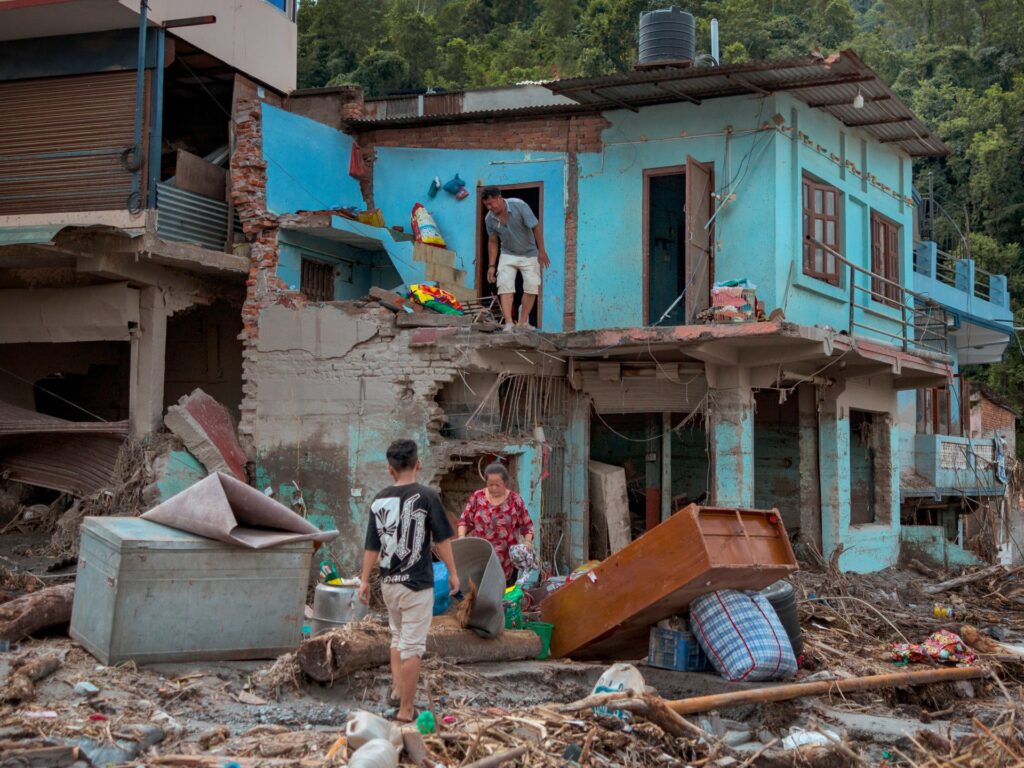
Nepal is currently confronting a fresh flood threat originating from a newly formed lake near its border with China. This alarming development follows a significant glacier collapse in the region, which has triggered a chain of environmental hazards, including flash floods and mudslides. The glacier’s sudden collapse caused a massive landslide downstream, which effectively blocked a river and resulted in the formation of a barrier lake.
The precarious nature of this newly formed lake poses serious risks as the water held behind the natural landslide dam could rupture or overflow, unleashing potentially devastating floods into downstream areas that are home to numerous communities. The sudden release of floodwaters could inundate villages, cause widespread destruction to infrastructure, and disrupt life and livelihoods in the region.
Glacial lakes in mountainous regions like Nepal are vulnerable to such events because of climate change-induced glacier melt and instability. Rising temperatures cause glaciers to shrink, sometimes rapidly, which can destabilize slopes and increase the likelihood of landslides and glacial lake outburst floods (GLOFs).
Nepal’s topography, characterized by steep valleys and mountainous terrain, makes it especially susceptible to these natural disasters. The recent event highlights the urgent need for constant monitoring and early warning systems for barrier lakes and flood-prone zones along the Himalayan border areas.
Authorities and environmental experts are keeping a close watch on the new lake’s water level and structural integrity. Efforts to mitigate the risk include planned controlled drainage or sluicing of the lake to reduce pressure on the natural dam. Additionally, evacuations and preparedness plans are being devised for downstream communities to minimize potential human and economic losses.
This incident adds to Nepal’s ongoing challenges with climate change impacts, reinforcing the importance of regional cooperation with China and Himalayan nations on disaster risk management and climate resilience. Swift action is vital to protect lives and reduce the long-term vulnerability of high mountain communities to future glacier-related hazards.
In summary, the glacier collapse leading to a barrier lake formation on Nepal’s border with China represents a significant flood threat. It underscores the escalating risks posed by climate change in Himalayan regions and the pressing need for integrated approaches to monitor, predict, and mitigate natural disasters caused by glacial instability.