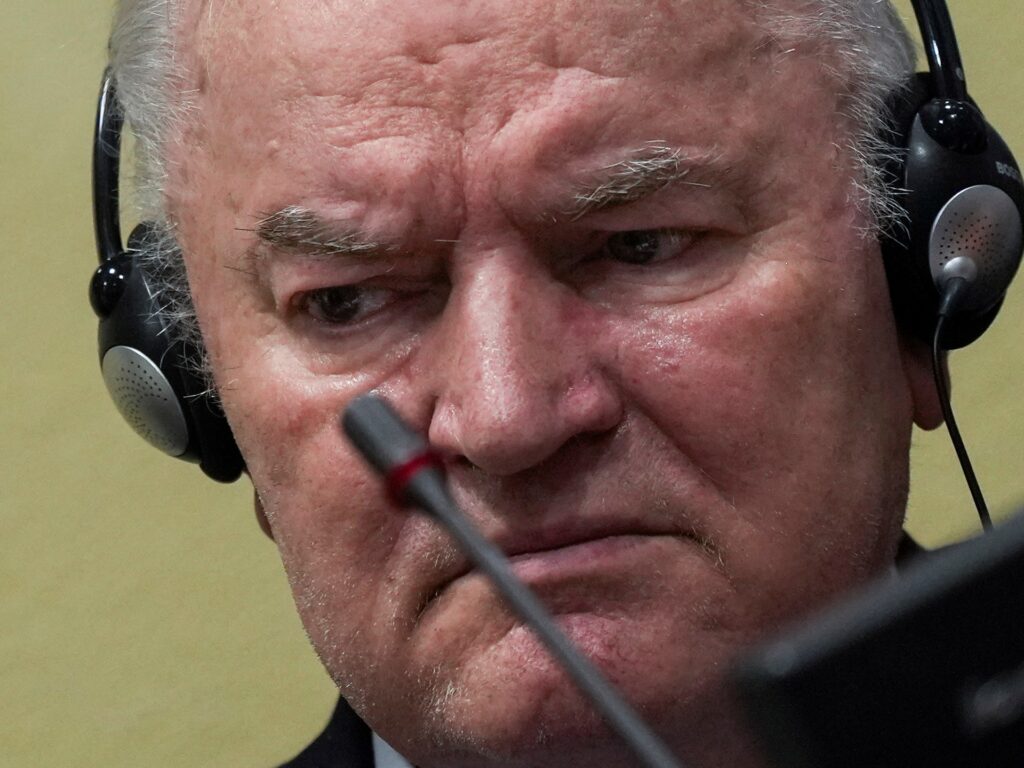
Ratko Mladic, the Bosnian Serb general widely known as the ‘butcher of Bosnia’, has died in a United Nations prison hospital located in The Hague, Netherlands. Mladic was a central figure in the Bosnian War and was convicted of multiple war crimes, including genocide. His death marks the end of a dark chapter in the Balkan history that is remembered for its horrific acts during the 1990s ethnic conflicts.
Mladic was held responsible for some of the most heinous crimes during the Bosnian War, including the Srebrenica massacre, which has been classified as genocide, and the prolonged siege of Sarajevo. These acts led to tens of thousands of deaths and left deep scars across Bosnia and Herzegovina and the broader Balkan region.
Captured in 2011 after years on the run, Mladic was subsequently tried by the International Criminal Tribunal for the former Yugoslavia (ICTY) in The Hague. In 2017, he was found guilty of genocide, war crimes, and crimes against humanity and sentenced to life imprisonment.
He had been serving his sentence in a UN detention facility in The Hague, where he reportedly died recently due to undisclosed health issues. Mladic was 79 years old at the time of his death.
The impact of Mladic’s actions and his subsequent condemnation has resonated throughout the international community. His trial was seen as a significant step toward justice for the victims of the Bosnian War and has played a vital role in setting legal precedents for prosecuting war crimes globally.
His death is likely to draw varied reactions across different communities, especially in Bosnia and Herzegovina where memories of the war remain deeply divisive. For many, Mladic embodied brutal aggression and ethnic cleansing, while some nationalist factions in the Balkans viewed him as a hero fighting for their ethnic group.
International leaders and human rights organizations have consistently emphasized the importance of remembering the atrocities committed during the Bosnian War, to ensure they are never repeated. They stress that the legacy of justice, despite Mladic’s death, remains a cornerstone in healing the wounds inflicted by the conflict.
As news of his death spreads, conversations about reconciliation, justice, and collective memory in the Balkans will inevitably gain renewed attention. The world continues to watch as the region grapples with its traumatic past while striving for a future grounded in peace and cooperation.
Ratko Mladic’s life and death remain a stark reminder of the consequences of war, hatred, and intolerance. His passing in a UN prison hospital closes the chapter on his personal story but opens new avenues for reflection on how societies can heal and move forward after such devastating conflicts.