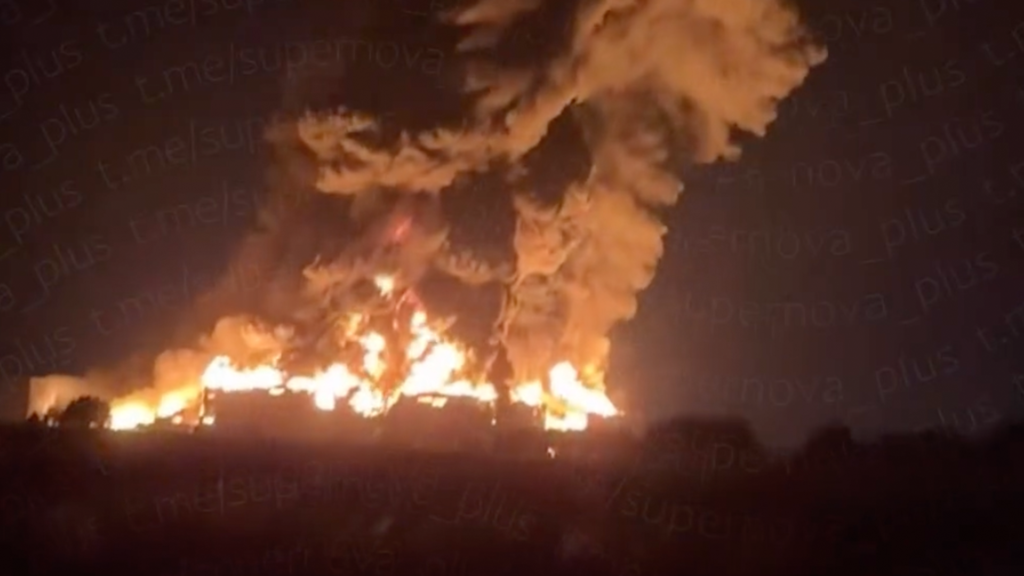
Russia’s largest online retailer, Wildberries, often dubbed Russia’s ‘Amazon’ for its vast e-commerce presence, has come under attack once again in a drone strike attributed to Ukrainian forces. This represents a continued escalation in targeting significant commercial infrastructure within Russia amidst ongoing hostilities.
Wildberries, a dominant player in Russia’s online retail market, serves millions of customers across the country, offering a wide range of consumer goods from clothing to electronics. The company’s resilience is crucial to Russia’s commercial sector, making this attack a notable disruption.
Reports indicate that the drone strike targeted critical Wildberries logistics centers, causing temporary interruptions in delivery operations. While detailed assessments of the damage are still underway, initial indications suggest the strike affected warehouse facilities integral to the company’s supply chain.
This latest attack follows a series of similar strikes aimed at crippling key logistics and supply nodes within Russia, a strategy being employed by Ukraine to impact economic lifelines alongside military efforts. Ukrainian officials have acknowledged these operations, emphasizing the intent to weaken Russia’s war infrastructure.
Wildberries had faced a previous drone strike several weeks prior, but quickly restored operations, demonstrating robust crisis response measures. The repetition of such attacks underscores the vulnerability of even large-scale commercial operations amidst the broader conflict.
Security experts note the increasing use of drone warfare in targeting soft infrastructure and commercial assets, marking a shift from traditional battlefield engagements. This technique enables precise strikes without risking personnel and signals a new front in modern conflict dynamics.
The impact on Wildberries’ customers and partners has been mitigated by contingency logistics plans, though concern remains about longer-term disruptions. Analysts predict that supply chain security will become a critical focus for Russian businesses operating under wartime conditions.
Wildberries’ leadership has called for enhanced protective measures and is coordinating with authorities to safeguard its facilities and workers. The company reassures customers of its commitment to maintaining service continuity despite these challenges.
The ongoing conflict between Russia and Ukraine continues to reverberate beyond conventional battle zones, increasingly affecting civilian infrastructure and commercial entities. Such developments highlight the multifaceted nature of modern warfare and its extensive societal repercussions.
International observers and trade organizations have expressed concern over the increasing targeting of key economic assets, warning that prolonged disruption could have wider implications for regional stability and economic recovery.
As the conflict remains unresolved, the targeting of companies like Wildberries illustrates the complex intersection of commerce and conflict, where economic entities can become inadvertent participants in geopolitical strife.
The full ramifications of the repeated drone attacks on Wildberries are still emerging, but the situation reinforces the urgent need for innovative approaches to protect critical infrastructure amid evolving conflict tactics.
This attack is a significant reminder that in contemporary warfare, the frontlines extend well beyond the battlefield, encompassing digital, economic, and logistic arenas, where resilience and adaptability are paramount for survival.
With the war ongoing, companies like Wildberries must navigate an increasingly hazardous landscape, balancing operational continuity with evolving security threats, while stakeholders watch closely for developments.
The international community continues to call for de-escalation and peaceful resolution, recognizing that prolonged conflict affects not only armed forces but also civilian life and commerce deeply.
Amidst these challenges, the resilience of Russian businesses, such as Wildberries, and their ability to adapt to these new realities will be crucial in shaping post-conflict recovery and economic stability.
As both sides advance their strategic objectives, the use of drone technology in targeting commercial infrastructure is likely to remain a contentious and escalating aspect of the conflict.
In conclusion, the recent drone strike on Wildberries underscores the evolving nature of warfare, where the battle extends into economic domains, challenging assumptions about security, commerce, and conflict resolution in the 21st century.