The water crisis in Sudan’s El Obeid refugee camps has reached a critical level, severely impacting the lives of families displaced by ongoing conflict. These camps, already struggling with limited resources, now face crippling shortages of clean and safe drinking water, exacerbating an already dire humanitarian situation.
El Obeid, a city in North Kordofan state, hosts thousands of refugees who fled violence and instability in various parts of Sudan. The continual fighting has forced families to abandon their homes and seek refuge in camps that are ill-equipped to meet their basic needs.
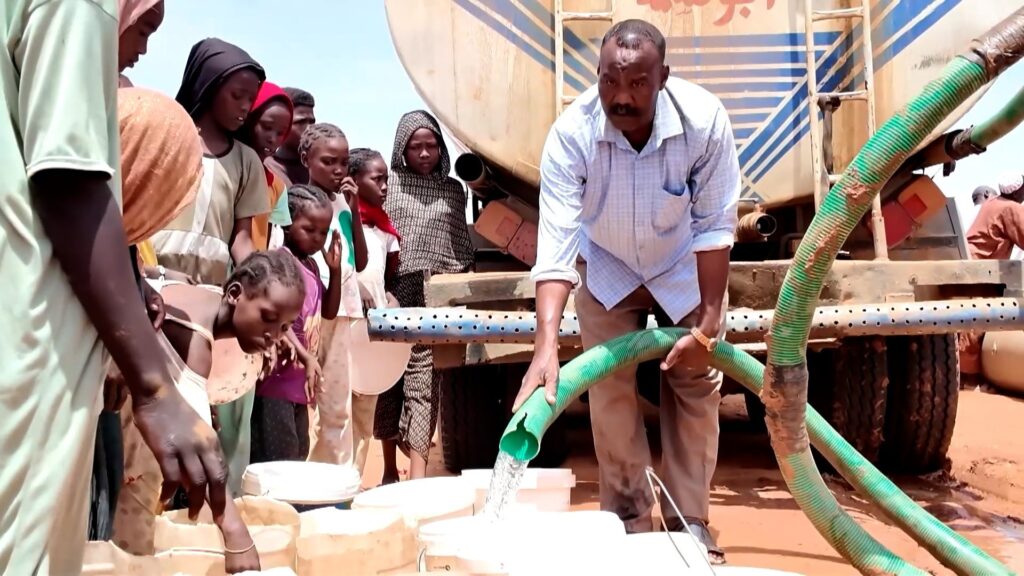
Water scarcity in El Obeid has resulted from several factors, including damaged infrastructure, reduced rainfall, and over-extraction of groundwater. The camps’ water supply systems have been strained beyond capacity, and residents report waiting for hours, sometimes days, to access limited water sources.
Women and children bear the brunt of this crisis, often traveling long distances to fetch water, exposing them to risks of violence and exhaustion. The lack of water also hinders proper sanitation and hygiene practices, raising fears of disease outbreaks in the densely populated camps.
Humanitarian organizations are sounding alarms and calling for urgent interventions to address the water shortage. Efforts include repairing water infrastructure, drilling new boreholes, and distributing water tanks, but funding constraints and security challenges hamper sustained assistance.
The water crisis also threatens food security in the camps, as insufficient water affects not only drinking needs but also small-scale agriculture and livestock, vital for refugees’ livelihoods.
Local authorities and international agencies emphasize the need for long-term solutions that improve water management and infrastructure resilience in El Obeid. They advocate coordinated action to enhance water access while ensuring the safety and dignity of displaced families.
Despite these challenges, the refugee community demonstrates resilience, organizing committees to manage water distribution and educate residents on conservation and hygiene practices. However, without significant support, this resilience may not withstand the mounting pressures.
The crisis in El Obeid underscores the broader challenges facing displaced populations in Sudan amid ongoing conflict and climate stress. It highlights the urgent necessity for comprehensive humanitarian aid and sustainable development measures to prevent further deterioration of living conditions.
In summary, the water shortage in El Obeid refugee camps has intensified the hardships of displacement, threatening health, dignity, and survival. Immediate and sustained actions are essential to alleviate suffering and uphold the rights of these vulnerable families struggling for a basic human necessity—water.