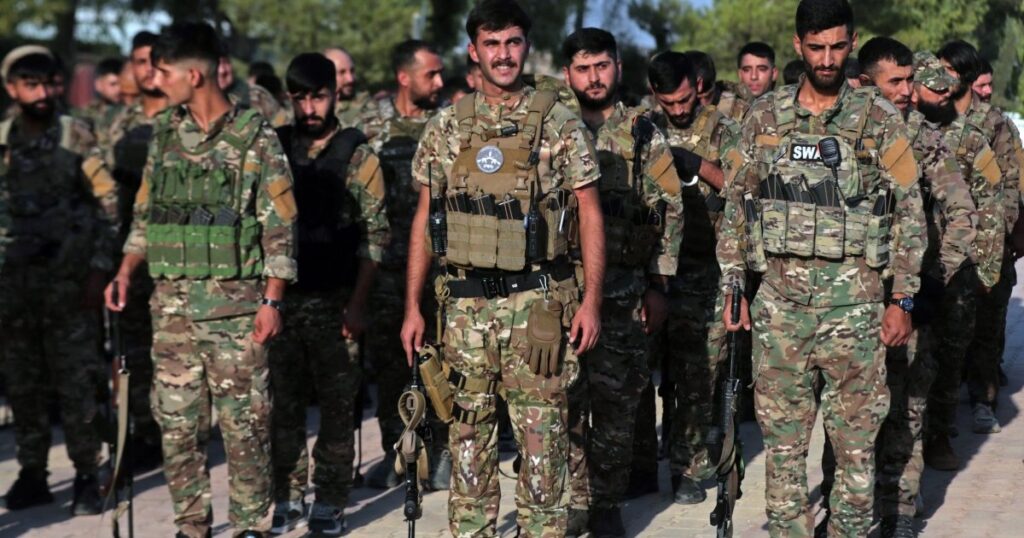
In a significant development in the Syrian conflict landscape, the Kurdish-led Syrian Democratic Forces (SDF) have officially dissolved following a strategic merger with the Syrian Arab Army. This merger marks a pivotal shift in the ongoing dynamics of power and territorial control in northeastern Syria, an area long contested by various factions in the Syrian civil war and the fight against ISIS.
The SDF, primarily composed of Kurdish fighters but inclusive of Arab and other ethnic groups, has been a key partner for the United States in the decade-long campaign against the Islamic State (ISIS). Their dissolution comes after years of autonomous governance in regions of northern Syria, where they established a self-administration known as Rojava.
Following the merger, the former SDF units are being integrated into the Syrian national army structure, signaling a consolidation of military power under Damascus. This move is seen by analysts as a step toward Syrian government regain control over its territory amid shifting alliances and external influences.
Amidst this military and political realignment, the former commander of the SDF has embarked on a campaign to preserve and promote the Kurdish language. Having witnessed the struggles and sacrifices over the past decade, the commander stresses the importance of cultural and linguistic preservation as a foundational element for Kurdish identity.
The campaign focuses on educational programs, media broadcasts, and cultural events aimed at reviving Kurdish language usage, which faced challenges during periods of conflict and political suppression. The promotion of the Kurdish language is viewed by many as crucial for the survival of Kurdish culture and an expression of ethnic pride.
The SDF’s decade-long fight against ISIS was marked by significant sacrifices and strategic victories that curtailed the extremist group’s territorial ambitions. However, the evolving geopolitical landscape and pressures from various state and non-state actors have led to realignments such as the current merger.
This development raises questions about the future of Kurdish political ambitions and autonomy within Syria. Kurdish leaders and their communities now face the dual challenges of negotiating their place within the Syrian state and safeguarding their cultural heritage.
International observers are closely monitoring the situation, as it has implications for regional stability, the fate of minority groups in Syria, and broader Middle Eastern geopolitics.
As the Kurdish-led forces transition into the framework of the Syrian army, the preservation campaign for the Kurdish language symbolizes a continuing narrative of resilience and identity amidst changing political realities.