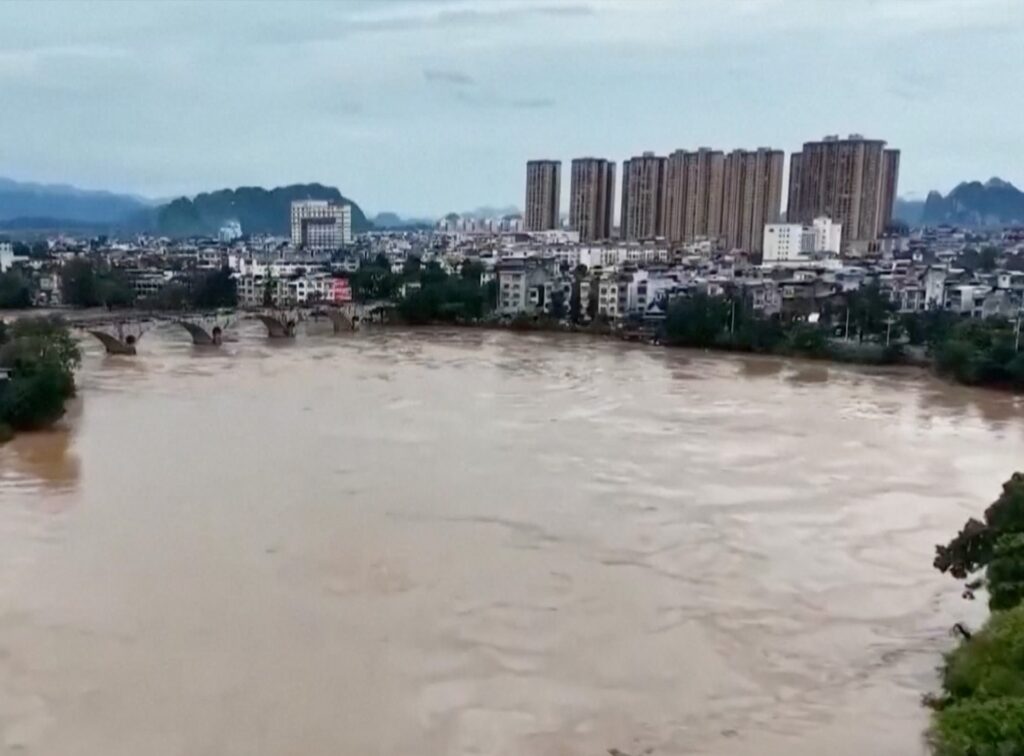
Typhoon Narra has unleashed heavy rain and caused severe flooding across regions of China and Vietnam, creating widespread disruption and challenges for local communities. The storm system, which intensified rapidly over the South China Sea, made landfall bringing intense rainfall and strong winds.
In China, the provinces most affected include Guangdong and Guangxi, where rivers have overflowed, leading to inundation of towns and villages. Authorities have reported that emergency services are on high alert, with numerous evacuations underway to protect vulnerable populations residing in flood-prone areas. Roads and rail networks have suffered damage, causing delays and interrupting transport links crucial for commerce and daily commuting.
Vietnam has also been grappling with the impact of Narra. Central and northern provinces have seen rivers swell beyond their banks, causing flooding in urban and rural communities. The Vietnamese government has mobilized disaster response teams, providing relief supplies and temporary shelters for those displaced by the rising waters.
Meteorologists have warned that the heavy rains associated with the typhoon could continue for several days, raising concerns about prolonged flooding and potential landslides in mountainous areas. The storm has disrupted agricultural activities as fields are submerged, threatening crop yields and the livelihoods of many farmers.
Residents have been urged to stay informed through official weather updates and to take precautionary measures to ensure safety. Schools and businesses in affected areas have suspended operations temporarily as officials assess ongoing risks and begin recovery planning.
This event highlights the increasing vulnerability of the region to extreme weather events, intensified by climate change, which experts say is contributing to the frequency and severity of typhoons in Southeast Asia. Recovery efforts will likely require significant humanitarian aid and infrastructure rebuilding, underscoring the need for improved disaster preparedness and resilience in these vulnerable areas.
Authorities in both countries continue to monitor the situation closely, coordinating cross-border communication to manage the storm’s aftermath. As Typhoon Narra moves away, the focus will shift to recovery and assessing the long-term impacts on communities and economies in the affected regions.