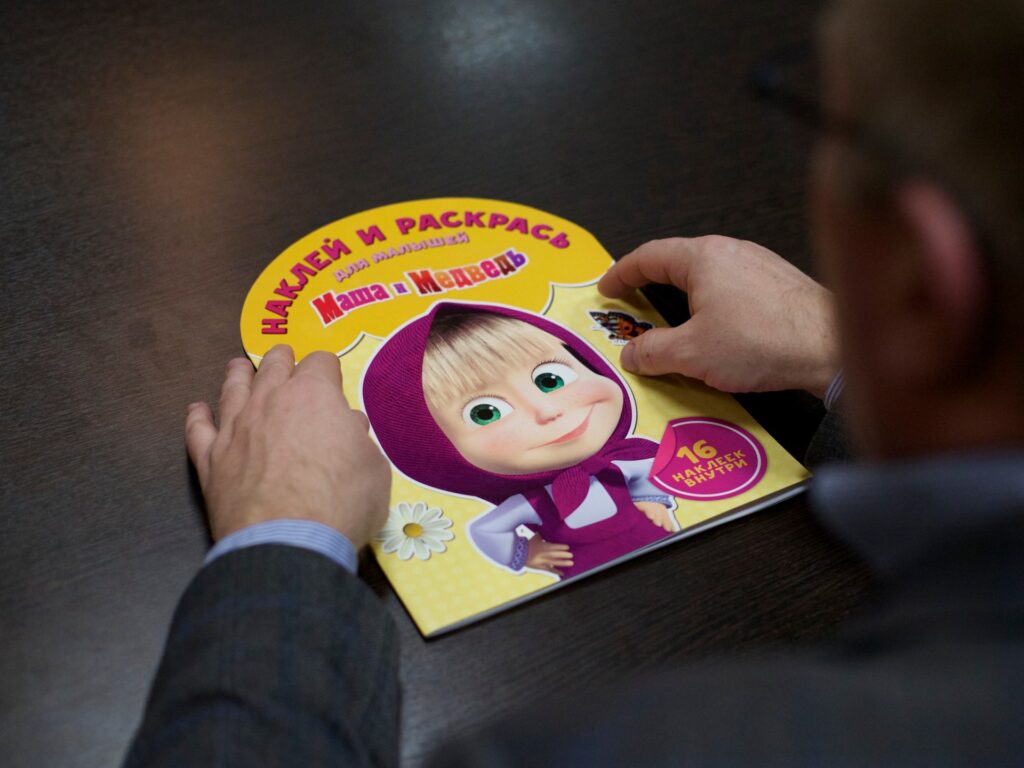
Ukraine has officially imposed sanctions on the well-known Russian children’s cartoon ‘Masha and the Bear.’ The decision comes after Ukrainian President Volodymyr Zelenskyy signed a decree targeting the producers of the show, accusing them of disseminating pro-Russian propaganda.
‘Masha and the Bear,’ a popular animated series enjoyed by children in many countries, has become a focal point of controversy amid ongoing tensions between Ukraine and Russia. The show’s producers have been accused by Ukrainian officials of promoting narratives supportive of Russian government viewpoints, which Ukraine perceives as undermining its sovereignty and national security.
In his decree, President Zelenskyy emphasized the importance of combating propaganda that could influence the minds of young audiences, warning that such content might be used to subtly sway public opinion in favor of Russian political agendas. By sanctioning the creators and distributors of the cartoon, Ukraine aims to curtail the impact of what it describes as manipulative messaging within seemingly innocent children’s entertainment.
This move reflects the broader context of strained relations between Ukraine and Russia since 2014, which have escalated dramatically following Russia’s full-scale invasion of Ukraine in 2022. The sanctions target the economic and cultural aspects linked to Russian influence, aiming to weaken pro-Russian narratives spread both overtly and through media channels.
Masha and the Bear has been widely distributed internationally, admired for its humor, storytelling, and animation style. However, for Ukraine, the show’s content and its widespread popularity raise concerns about the soft power influence of Russian media during ongoing conflict.
Analysts suggest that Ukraine’s response to the cartoon is part of a larger strategic effort to protect its cultural space and national identity amidst persistent information warfare. By restricting access to media deemed propagandistic, Ukraine hopes to safeguard its younger generations from being exposed to what it considers biased or misleading portrayals.
The sanctions will likely affect the production, distribution, and financial operations behind the cartoon within Ukrainian jurisdiction. At the same time, the decree sends a strong message highlighting the role of media and entertainment in geopolitical conflicts and the significance nations place on controlling narratives.
International reactions to the sanctions have varied, with some viewing the move as a necessary step in Ukraine’s defense against Russian aggression, while others express concerns about censorship and cultural freedom.
In summary, Ukraine’s sanctioning of ‘Masha and the Bear’ underscores the depth of its conflict with Russia, extending beyond traditional military battles into the realm of cultural and informational influence. The decree marks a notable chapter in Ukraine’s ongoing efforts to counter pro-Russian propaganda and maintain control over its national narrative and youth development.