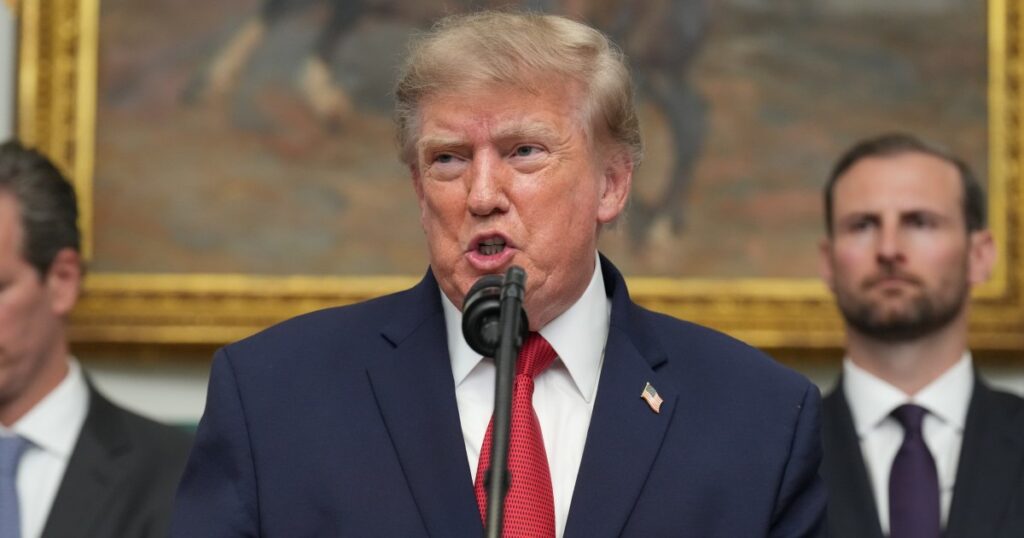
In a recent statement regarding escalating tensions between the United States and Iran, former U.S. President Donald Trump characterized the strategic Strait of Hormuz as ‘American territory.’ This statement comes amid ongoing conflicts and geopolitical strains in the region, which is a critical chokepoint for global oil shipments.
Trump expressed skepticism about Iran’s willingness to engage in negotiations, stating that “Iran would love to make a deal, but they’re not ready to make the right deal in my opinion.” His remarks highlight continuing doubts over Iran’s intentions and the challenges in achieving a diplomatic resolution to the tensions.
The Strait of Hormuz is a narrow passage that connects the Persian Gulf with the Gulf of Oman and the Arabian Sea. It is one of the world’s most important oil transit chokepoints, with a significant percentage of the world’s petroleum passing through it each day. Control and security of this waterway have long been focal points of international concern, particularly between the U.S. and Iran.
Trump’s assertion of the waterway as ‘American territory’ reflects a hardline stance, signaling that the United States views the strait as critical to its national security and global energy interests. This rhetoric underscores the high stakes involved, as any disruption to the flow of oil through the strait could have significant global economic repercussions.
The historical context of U.S.-Iran relations is fraught with tension, including sanctions, military confrontations, and diplomatic breakdowns. Despite previous efforts, a renewed nuclear deal remains elusive, with both sides wary of making concessions.
Experts suggest that Trump’s comments may be intended to reinforce U.S. determination to maintain influence over the region and deter Iranian actions perceived as threats. The statement could also be viewed as part of a broader strategy to pressure Iran into accepting terms more favorable to U.S. interests.
Iran, for its part, has consistently asserted its sovereign rights over the Strait of Hormuz and has warned against any foreign military presence it perceives as aggressive. The Iranian government maintains that it is willing to negotiate but on conditions that preserve its autonomy and strategic interests.
The international community remains attentive to developments in the region, given the potential for conflict escalation. The Strait of Hormuz is a vital artery for global commerce, and instability there could disrupt markets and fuel wider geopolitical crises.
As the situation evolves, diplomatic efforts and international engagement will be crucial to prevent further deterioration and to promote a peaceful resolution. The challenge lies in balancing security concerns, economic interests, and regional sovereignty in a volatile environment.
In summary, Trump’s recent comments underscore the ongoing complexity and significance of the Strait of Hormuz in U.S.-Iran relations. With tensions high and the stakes elevated, the world watches closely as the two nations navigate a path towards potential negotiation or confrontation.