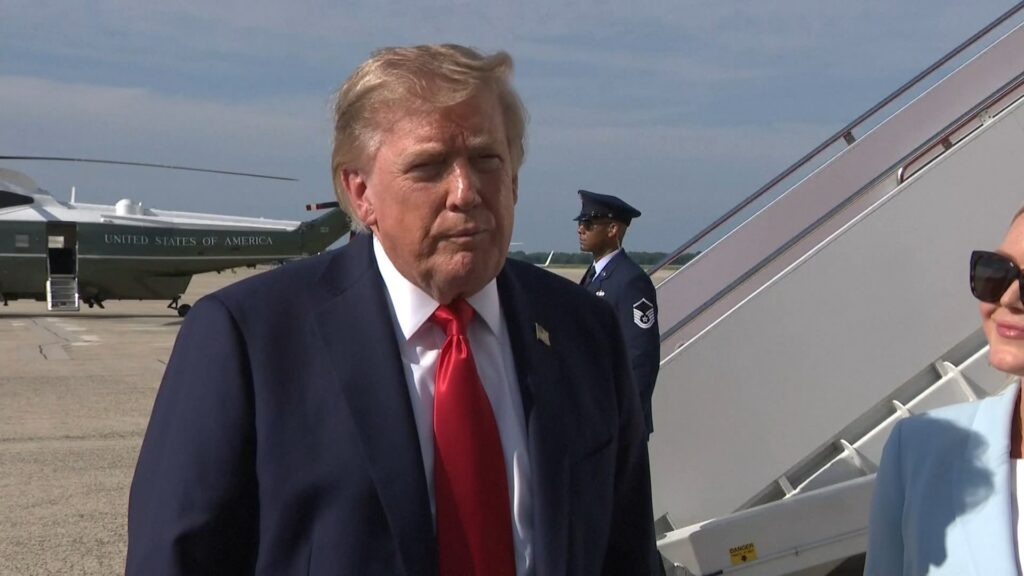
Former U.S. President Donald Trump has once again voiced his perspective on the economic and military condition of Iran amid ongoing sanctions. In recent statements, Trump reiterated his claim that Iran is significantly weakened by the sanctions imposed and expressed his belief that the Iranian government would be keen to negotiate a deal.
Trump’s comments emphasize the impact of sanctions that were aggressively enforced during his administration. He suggested that these measures have had tangible effects on Iran’s economy and military capabilities, contributing to their current state of vulnerability.
The former president remarked, “We’re seeing what happens” with the sanctions, implying that the consequences he predicted are materializing. This statement underscores his argument that a firm stance through economic pressure can compel Iran to reconsider its strategic decisions.
Moreover, Trump asserted that Iran “would love” to engage in discussions, suggesting a readiness or desire on the part of Iranian leadership to pursue a diplomatic resolution. He alluded to the possibility that continued pressure might bring Iran back to the negotiating table under terms favorable to the United States.
Observers note that Trump’s remarks reflect a broader policy viewpoint that prioritizes stringent sanctions as a means to curb nuclear ambitions and regional influence of Iran. His administration’s approach largely differed from subsequent U.S. policies that considered re-engaging with Iran through diplomacy and easing sanctions.
The economic hardship in Iran, partially attributed to sanctions, includes challenges such as inflation, currency devaluation, and restricted access to international markets. Militarily, experts point to limitations in procurement and development capabilities due to embargoes and isolation.
Political analysts suggest that Trump’s comments may be aimed at influencing current policy debates, particularly those related to the Joint Comprehensive Plan of Action (JCPOA) or Iran nuclear deal discussions ongoing in Washington and abroad.
However, critics of Trump’s approach argue that the sanctions have also adversely affected Iranian civilians and regional stability, complicating diplomatic efforts and humanitarian conditions.
In the broader context, Iran’s resilience and responses to sanctions, including its strategic partnerships and domestic policies, remain critical factors influencing the effectiveness of any economic pressure.
As tensions continue in the Middle East, the international community watches closely the impact of sanctions and diplomatic maneuvers, seeking a balance between security concerns and the potential for peaceful conflict resolution.
Trump’s remarks add a layer of political narrative, underscoring the complexities and ongoing debates surrounding U.S.-Iran relations. Whether his optimistic view of sanctions leading to a deal aligns with reality remains a subject of analysis among policymakers and experts.
Ultimately, the situation with Iran illustrates the challenges and dynamics of international diplomacy in dealing with contentious geopolitical issues through a combination of economic measures and negotiation efforts.