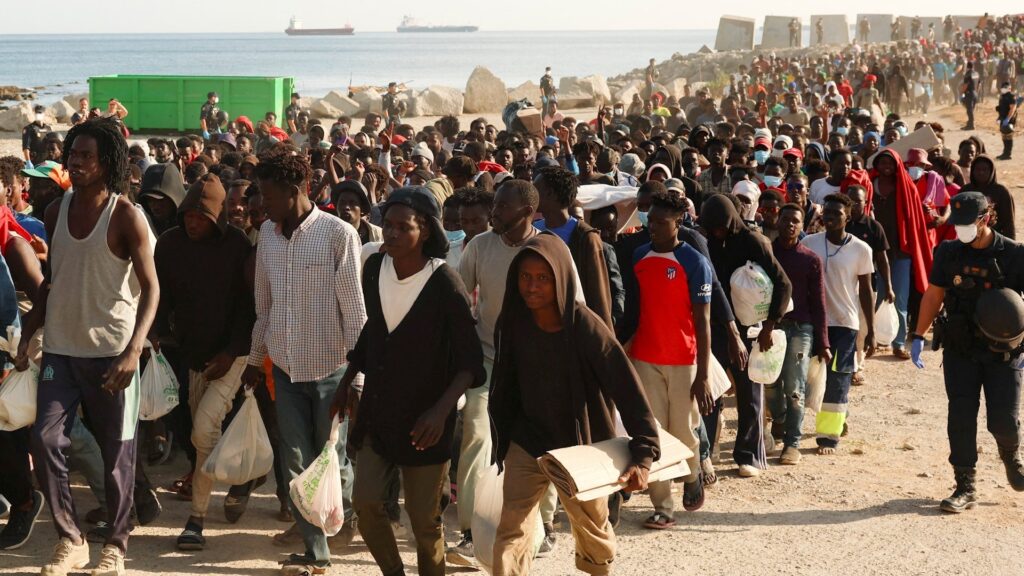
In an ongoing effort to manage the migrant situation, Spanish police have initiated a large-scale operation to evict hundreds of migrants living in makeshift camps along a beach in Ceuta, Spain. Ceuta, a Spanish autonomous city located on the north coast of Africa, has been a frequent entry point for migrants seeking to enter European territory. The authorities reported that the migrants were housed in informal settlements on the beach, which posed significant health and safety risks due to their makeshift nature and exposure to the elements.
The police intervention involved safely relocating the individuals from these camps to designated shelters where they could receive basic necessities such as food, medical care, and accommodation. Spanish officials emphasized that the operation was carried out with respect to the migrants’ human rights and aimed to improve their living conditions.
Local government representatives cited concerns over the sanitation and vulnerability of people residing in the unsanitary and crowded beach settlements. Moreover, the recent influx of migrants in Ceuta had overwhelmed the existing infrastructure designed to provide humanitarian aid.
Eviction from the beach camps is part of a broader strategy by Spanish authorities to implement more organized and humane management of migration flows. The government reiterated its commitment to cooperating with international organizations to ensure the welfare of migrants and to maintain public order.
Human rights groups have been closely monitoring the situation, calling for continued vigilance to protect the dignity and rights of migrants. They welcomed the move to shelters but urged authorities to ensure that the new accommodations meet international standards.
Ceuta has been a focal point in the complex migration dynamics between Africa and Europe. Migrants often risk dangerous sea crossings or scale fences to enter the city as a gateway to Spain and the wider European Union. The situation in Ceuta reflects broader challenges faced by border regions across Europe handling large migrant arrivals.
The Spanish government continues to balance humanitarian concerns with security measures as it addresses the ongoing migration challenges in Ceuta. Authorities pledged to provide necessary services and support to all migrants while enforcing regulations to prevent unauthorized encampments.
This recent action in Ceuta represents a critical step in the city’s efforts to manage migration in a manner that protects both the migrants and the local community, highlighting the complex realities of migration in this Mediterranean border region.