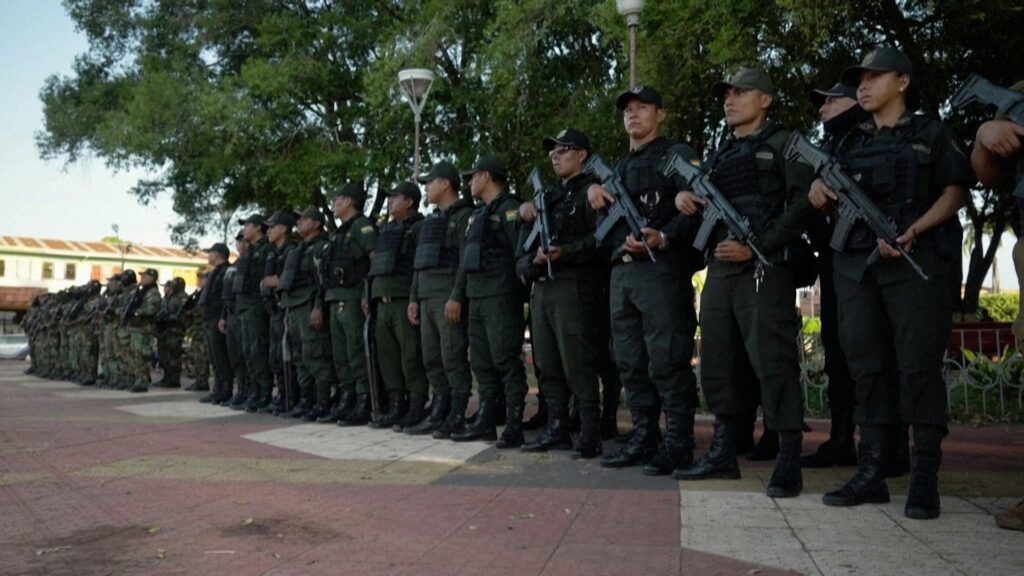
In a remote Bolivian Amazon village, tensions are escalating as Brazilian drug gangs intensify their efforts to gain control over lucrative drug trafficking routes. This encroachment by criminal organizations threatens the safety and stability of local communities, which are ill-equipped to deal with such violence and lawlessness.
The region, known for its dense rainforest terrain and sparse population, has historically been difficult for law enforcement to patrol effectively. Drug traffickers exploit this, using the area as a strategic corridor for moving narcotics from production zones in Brazil into Bolivia and onward to international markets.
Locals report an increase in violent incidents, including armed confrontations between rival gangs and intimidation tactics aimed at villagers who resist cooperating. The presence of well-armed groups has led to a climate of fear, disrupting daily life and economic activities such as agriculture and fishing, which are vital for the community’s survival.
Authorities in Bolivia are struggling to respond adequately due to limited resources and logistical challenges posed by the Amazon rainforest environment. Cross-border cooperation with Brazilian law enforcement has been suggested as a necessary measure to address the transnational nature of the threat.
International organizations have also expressed concern over the growing influence of Brazilian drug gangs in Bolivian territory, warning that the expansion could destabilize not only the immediate region but also broader efforts to combat drug trafficking in South America.
Community leaders are calling for increased security measures and investment in development programs to offer alternatives to the illicit economy fostered by drug trafficking. They emphasize the importance of preserving the social fabric and protecting the rights and safety of indigenous populations living in these remote regions.
This emerging crisis highlights the complex dynamics of the drug trade in South America, underscoring the urgent need for comprehensive strategies that address both supply and demand, reinforced by international cooperation and local engagement.
The situation in the Bolivian Amazon remains precarious, with hopes that heightened awareness and coordinated action will help restore peace and stability to vulnerable communities facing the growing threat of organized crime.