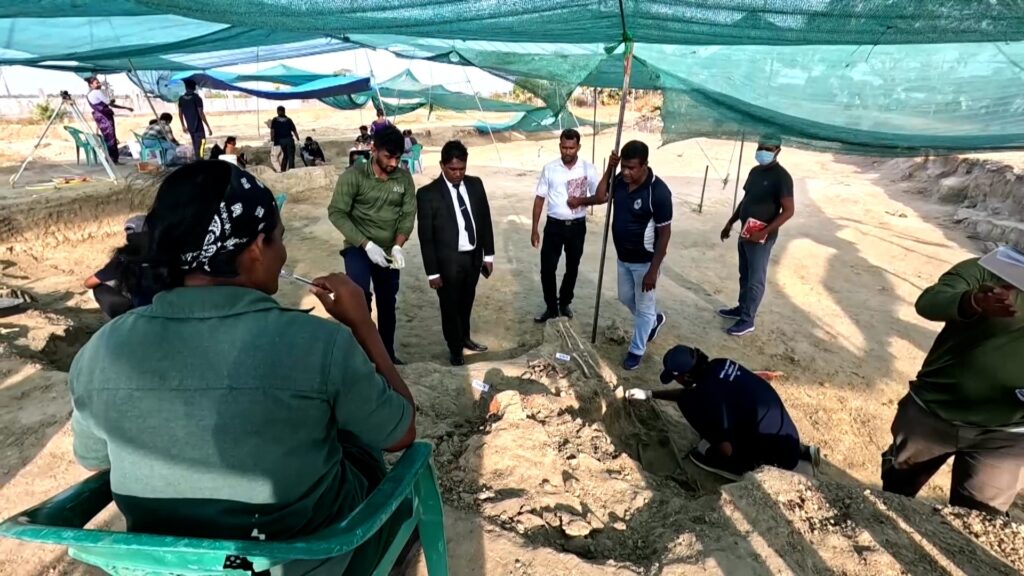
In a significant archaeological and forensic revelation, investigators have uncovered a mass grave in Sri Lanka containing the skeletal remains of 582 individuals, among them babies and children. This mass grave excavation sheds light on a tragic and sombre chapter in the region’s history.
The discovery was made during a thorough excavation aimed at uncovering evidence related to past conflicts and human rights atrocities within the island nation. The site contained a diverse group of victims, spanning adults, infants, and young children, highlighting the indiscriminate nature of the violence that led to this burial.
Experts involved in the excavation have noted the grim nature of the findings, emphasizing the importance of honoring the victims and understanding the circumstances leading to such mass fatalities. Forensic archaeologists are analyzing the remains to provide insights into the time period, cause of death, and the identities or communities to which the victims might have belonged.
Initial assessments suggest that this mass grave could be linked to a period of intense civil strife in Sri Lanka, possibly connected to the decades-long civil war that affected many civilians throughout its duration. The presence of children among the remains underscores the severe impact conflict had on all segments of the population.
Authorities have stated their commitment to conducting a comprehensive investigation to establish a fuller picture of the events that led to the mass grave’s creation. There is also an emphasis on providing closure to families of missing persons who may be among those discovered.
Human rights organizations have called for transparent and thorough inquiries, urging the Sri Lankan government to ensure accountability and justice for the victims. The discovery also raises renewed calls for reconciliation and healing among communities affected by the prolonged conflicts.
The excavation process has involved meticulous efforts by forensic teams, involving careful ground-penetrating radar surveys, systematic digging, and preservation of evidence to maintain the integrity of the site for further legal and historical scrutiny.
International observers and representatives from humanitarian organizations are expected to engage with local authorities as the investigation progresses, signaling the global importance of the findings.
The mass grave’s discovery is a stark reminder of Sri Lanka’s turbulent recent history and the human cost of internal conflict. It also serves as a catalyst for ongoing dialogue regarding peacebuilding, justice, and the need to prevent future atrocities.
As forensic studies continue, there is hope that the identities of the victims can be established and that their stories will contribute to a fuller understanding of the past. The uncovered remains stand as a powerful testament to the lives lost and the urgency of memory in the pursuit of national healing.