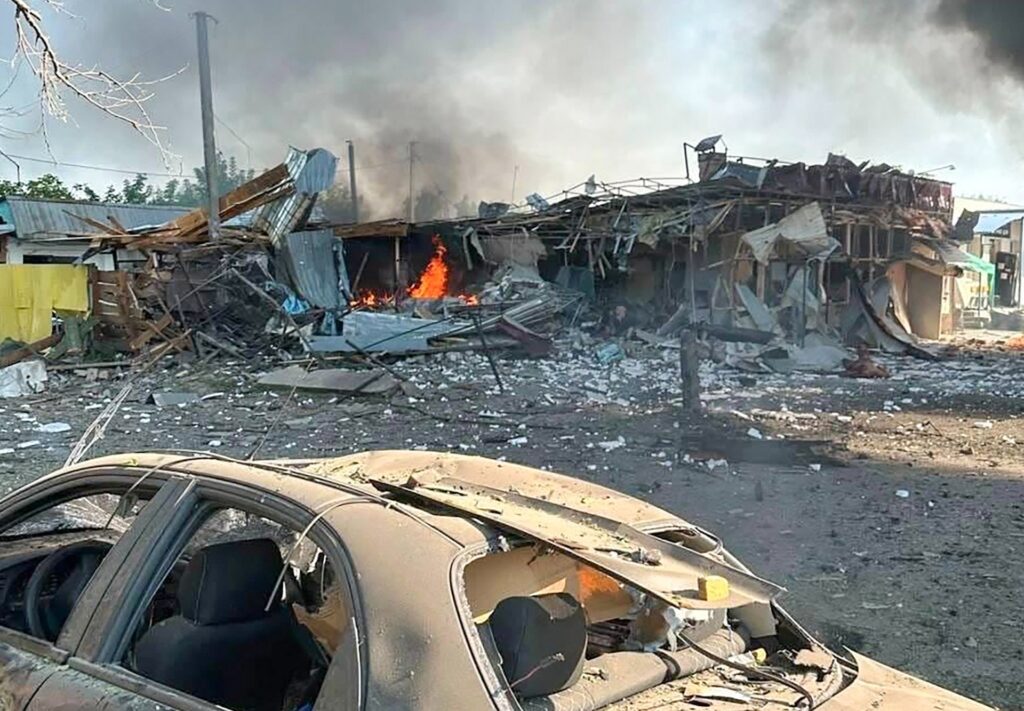
In a recent escalation of conflict, Russian military strikes have resulted in the deaths of 10 people and injuries to eight others in Ukraine’s city of Kharkiv. The attacks, which have caused significant distress and disruption to the local population, underscore the ongoing hostilities between Russia and Ukraine.
Kharkiv, one of Ukraine’s largest cities and a pivotal location in the conflict, has been under repeated assault, with this latest incident marking a grim chapter in the city’s experience of the war. The strikes targeted civilian areas, exacerbating the humanitarian situation and prompting urgent calls for ceasefire and dialogue from international observers.
Meanwhile, on the opposing side, Ukrainian forces have demonstrated their own capabilities by deploying drones in operations over Moscow. These drone strikes symbolize a bold statement from Ukraine, signaling their capacity to strike within Russian territory and challenging the security perceptions within the Russian capital.
The use of drones represents a newer dimension to the conflict, bringing technological advancements into the battlefield and changing the strategic landscape. Ukrainian officials have framed the drone strikes as retaliatory measures, aiming to disrupt Russian military logistics and communications.
The international community continues to monitor these developments closely, as the violence threatens to escalate further, affecting not only the immediate areas but also geopolitical relations globally. Human rights organizations have condemned attacks on civilians and called for immediate humanitarian corridors to allow aid to reach those affected.
Both Russia and Ukraine have suffered significant casualties and infrastructure damage since the conflict began, with civilian populations bearing much of the brunt. The recent strikes in Kharkiv have heightened concerns about the safety and security of residents, many of whom have been living under the constant threat of bombardment.
Experts warn that continued aggression risks undermining regional stability and complicating peace efforts. Diplomatic channels remain open but fragile, with ongoing international efforts to mediate and bring the parties to a sustainable agreement.
As the situation develops, the world watches closely, hoping for de-escalation and a resolution that can bring lasting peace to a region scarred by prolonged conflict.