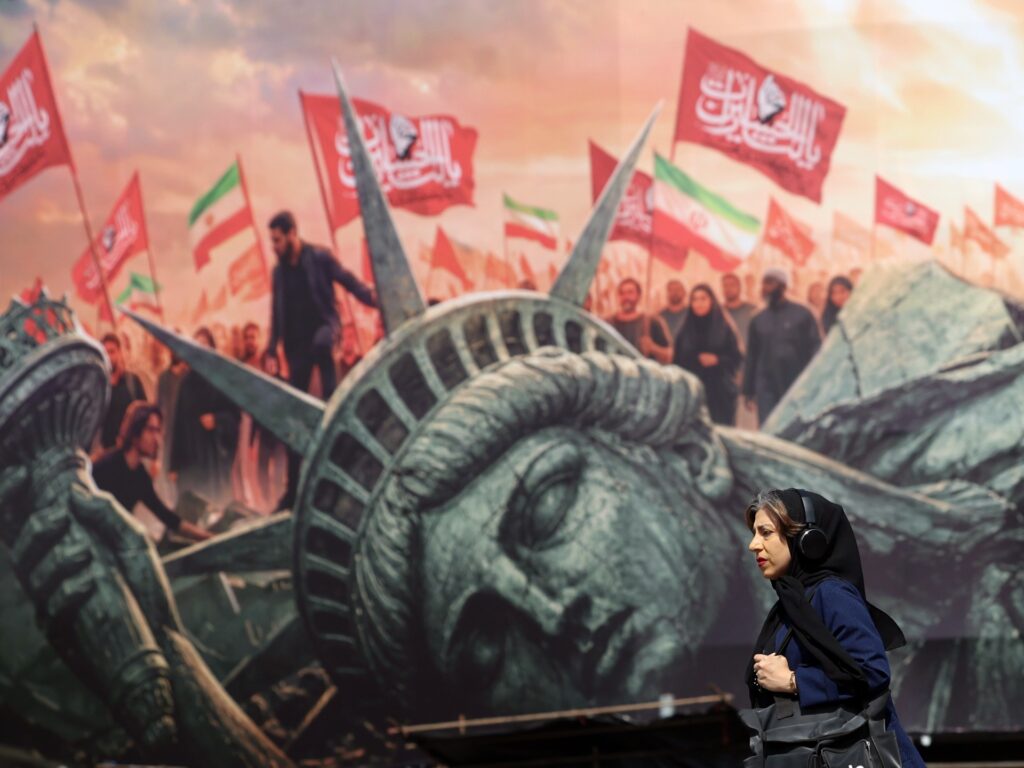
In a bold and controversial statement, former President Donald Trump has publicly demanded that Iran “put up the white flag,” signaling a call for the country to surrender or cease hostilities. This demand comes amid ongoing tensions between the United States and Iran, particularly concerning Iran’s Revolutionary Guard Corps (IRGC).
Trump further claimed that despite the stern rhetoric, the US maintains direct contact with the IRGC. This admission marks a notable and somewhat contradictory stance, considering the official US policy often labels the IRGC as a terrorist organization and enforces strict sanctions.
In addition to these declarations, Trump denied any intention from his side to rush towards ending the conflict before the upcoming US midterm elections in November. He suggested that the situation is being handled with a focus on national interests rather than electoral timelines.
The former president’s remarks have sparked significant discussion within political and diplomatic circles. His call for Iran to “put up the white flag” is seen as an aggressive posture, which some analysts warn could escalate tensions further if not backed by strategic diplomatic efforts.
Furthermore, the acknowledgment of direct communication with the IRGC suggests that backchannel dialogues might be taking place, potentially opening avenues for negotiation or conflict management away from public scrutiny.
This development raises questions about the consistency and transparency of US foreign policy in the Middle East. Critics argue that the mixed signals may undermine America’s credibility and complicate relations with its allies and adversaries alike.
Iran’s response to Trump’s demand remains cautious, with official statements emphasizing sovereignty and resistance against external pressure. The IRGC has historically resisted surrender calls and continues to assert its role in defending Iran’s national interests.
The timing of Trump’s remarks, close to the US midterms, also indicates the intertwining of foreign policy with domestic political agendas. Observers note that such statements often influence public opinion and voter perceptions, adding a layer of complexity to international diplomacy.
As tensions persist, the international community watches closely. The potential for either escalation or diplomatic breakthroughs hinges on how these communications and demands evolve in the coming weeks.
In summary, Donald Trump’s recent remarks encapsulate the fraught and multifaceted nature of US-Iran relations. His demand for Iran to surrender, coupled with claims of ongoing contact with the IRGC and a denial of election-driven motives, highlight the intricate balance of aggression and dialogue shaping the geopolitical landscape today.