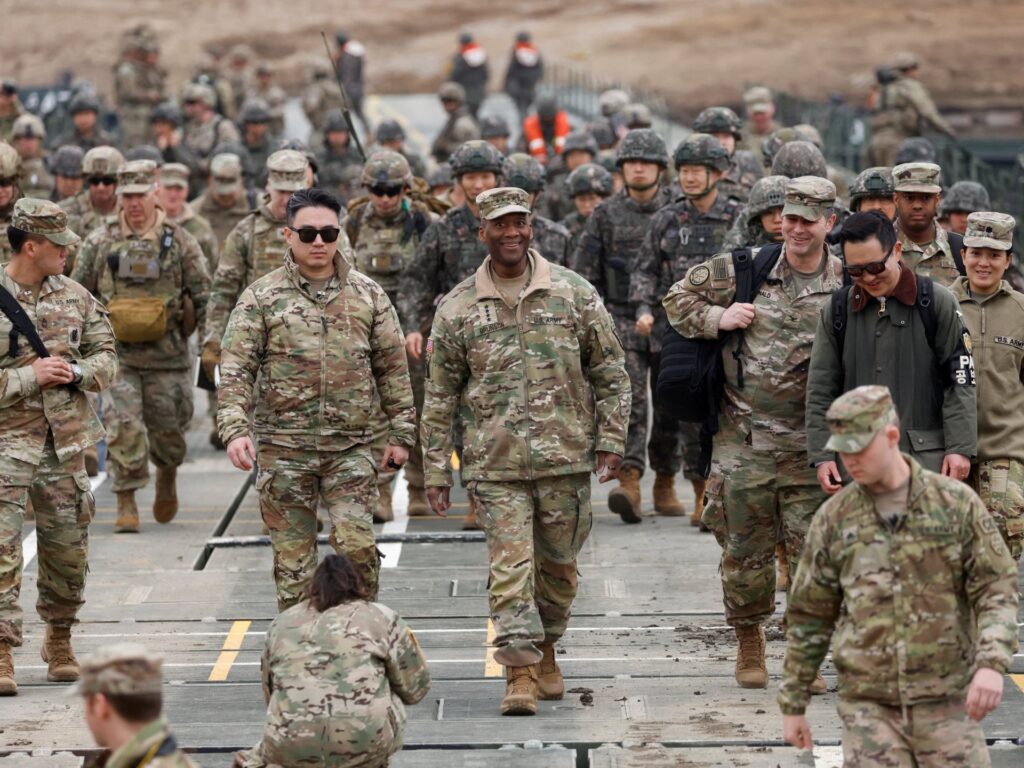
In a recent political development, former President Donald Trump’s decision to scale back joint military exercises with South Korea has drawn sharp criticism from Democratic leaders. The move, which reduces the frequency and scope of these drills, has sparked a significant debate about the implications for regional security and international alliances.
The joint military drills between the United States and South Korea have long been a cornerstone of deterrence strategy against North Korea’s aggressive posture on the Korean Peninsula. These exercises not only demonstrate military readiness but also signal a strong commitment to South Korea’s defense.
Democrats have expressed concern that scaling back these drills could embolden North Korea, potentially undermining peace and security in the region. They argue that maintaining a robust military presence and conducting regular exercises is vital to counter North Korea’s nuclear ambitions and provocations.
Republican Senator Thom Tillis has also weighed in on the matter, emphasizing that the decision could have broader international ramifications. Senator Tillis warned that reducing military drills might allow North Korea to divert resources and provide more support to Russia, particularly in the ongoing conflict in Ukraine. This perspective highlights the interconnected nature of global security issues and the potential consequences of altering military strategies.
The criticism from both Democrats and some Republicans underscores the complexity of balancing diplomatic engagement with military preparedness. While attempts to reduce tensions with North Korea are seen as positive steps toward peace talks, there is a widespread consensus among many lawmakers that such efforts should not come at the expense of readiness and deterrence.
Experts in international relations suggest that the decision to scale back drills may be influenced by a desire to create a conducive environment for renewed negotiations with North Korea. However, they caution that without credible military deterrence, North Korea may interpret these gestures as signs of weakness.
South Korea has also voiced concerns about the implications of the scaled-back military exercises. The South Korean government highlighted the importance of maintaining strong military cooperation with the United States to ensure security and stability on the peninsula.
Critics of the decision argue that the United States must remain vigilant, especially given North Korea’s continued missile tests and nuclear developments. They assert that a robust demonstration of military strength is essential to deter any potential aggression and to reassure allies in the region.
In response to the criticism, supporters of Trump’s policy argue that reducing military drills can decrease the likelihood of accidental conflict and can be a step toward peaceful coexistence. They emphasize the need for diplomatic solutions and economic incentives to encourage North Korea to denuclearize.
The controversy surrounding the scaling back of military drills with South Korea reflects broader debates within U.S. foreign policy regarding how best to manage relations with North Korea and maintain security in the Indo-Pacific region.
As the situation develops, it remains to be seen how this decision will impact North Korea’s behavior and the strategic dynamics involving Russia and Ukraine. Lawmakers from both sides continue to monitor the effects closely, balancing the goals of peace, security, and strategic stability in a complex geopolitical landscape.