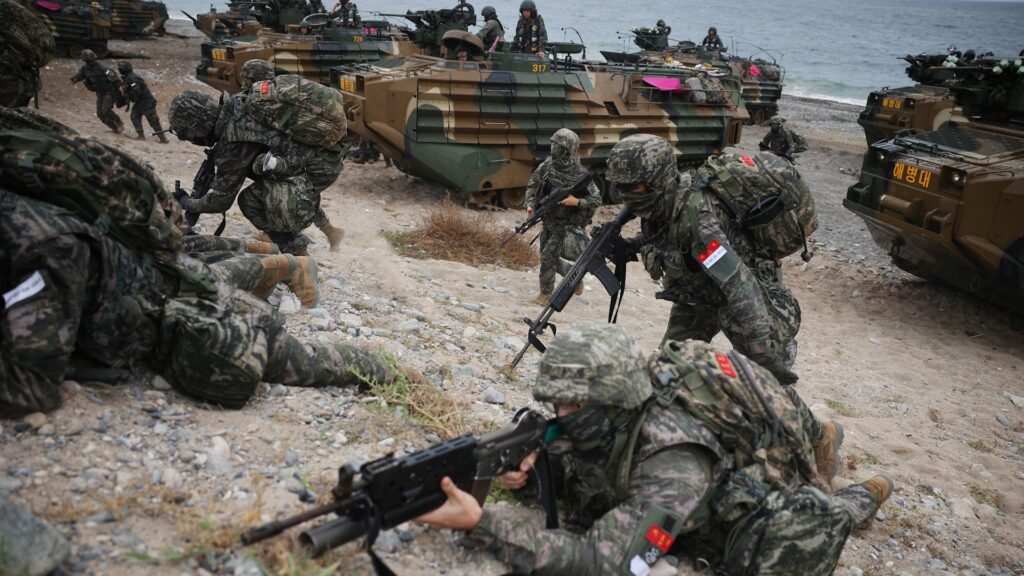
In a significant move reflecting a shift in U.S. military strategy in East Asia, President Donald Trump has directed the United States military to reduce the scale and frequency of joint military exercises conducted with South Korea. This order signals a departure from previous years’ robust training operations aimed at maintaining readiness against potential threats from North Korea.
The decision to scale back these drills comes amidst ongoing diplomatic efforts to engage North Korea in denuclearization talks, with the Trump administration emphasizing the need to balance military preparedness with diplomatic negotiations. Joint exercises have historically been a point of tension with Pyongyang, which frequently condemns such drills as provocative acts.
Officials within the Department of Defense have begun preparations to implement the order, which involves reducing the size of troops deployed for exercises and limiting the scope of maneuvers carried out during the joint sessions. The exact scale of reduction has not been publicly disclosed, but insiders suggest a notable decrease designed to lower the operational footprint without compromising deterrence capabilities.
South Korean leaders have expressed cautious understanding of the move, acknowledging the importance of defense readiness while supporting diplomatic engagement with the North. Analysts suggest that curbing the military exercises could contribute to lowering tensions on the Korean peninsula, potentially paving the way for more productive peace talks.
Critics, however, argue that scaling back military drills could weaken the alliance’s defensive posture and embolden North Korea. They caution that a reduced military presence may send unintended signals of vulnerability or decreased commitment to the security of South Korea.
The U.S.-South Korea military alliance has been a cornerstone of regional security since the Korean War armistice in 1953. Regular joint training exercises have played a critical role in ensuring interoperability and readiness among allied forces.
President Trump’s directive is part of a broader strategic recalibration as the administration seeks to leverage military readiness and diplomatic channels to achieve denuclearization objectives on the Korean peninsula. The move has sparked a wide range of reactions, highlighting the complexities involved in balancing deterrence, diplomacy, and regional stability.