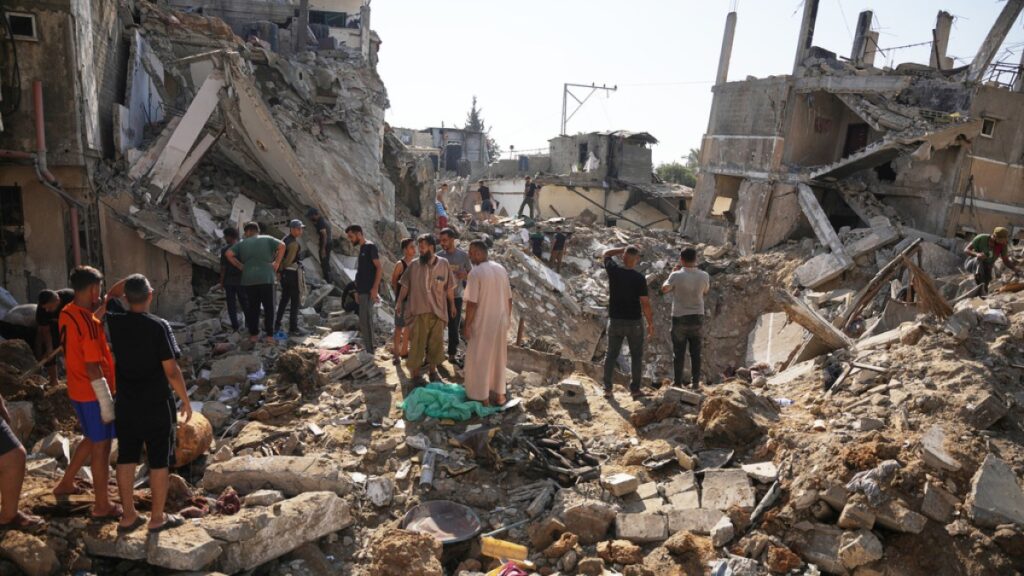
In the midst of ongoing violent confrontations in Gaza, Jared Kushner, former Senior Advisor to President Donald Trump and special envoy, has made a firm statement regarding the rebuilding of Gaza. Kushner declared that the United States will not allow the reconstruction of Gaza unless Hamas, the Palestinian militant group governing the region, agrees to disarm.
This declaration comes as Israeli military strikes against Gaza continue, targeting Hamas infrastructure and leadership amidst escalating conflicts. Kushner emphasized that any efforts to rebuild the war-torn Gaza Strip will be contingent upon Hamas relinquishing its arms to ensure lasting peace and security in the region.
Kushner also reiterated the U.S. administration’s stance on Israel’s right to defend itself, affirming that the United States would not place any restrictions on Israel’s military actions as it responds to threats from Hamas. His comments underline a strong U.S. commitment to Israel’s security amid the ongoing violence.
The destruction in Gaza has drawn international concern, with many countries and organizations calling for ceasefires to allow humanitarian aid and reconstruction efforts. However, Kushner’s remarks signal that the U.S. position remains resolute, linking reconstruction directly to the disarmament of Hamas, which many Western governments classify as a terrorist organization.
This policy approach reflects a broader U.S. strategy to pressure Hamas into abandoning armed resistance against Israel. It impacts diplomatic efforts, aid distribution, and the overall geopolitical landscape in the Middle East.
The statement has sparked diverse reactions. Supporters argue that disarming Hamas is crucial for regional stability and to prevent future conflicts. Critics, however, caution that withholding reconstruction aid could exacerbate humanitarian crises and deepen resentment among Gaza’s civilian population.
As the conflict continues and humanitarian needs in Gaza grow, the international community faces challenges balancing security concerns with urgent humanitarian responses.
Kushner’s comments also raise questions about the future role of the U.S. and other nations in mediating peace between Israel and Palestinian authorities and addressing the complex conditions on the ground.
The situation remains fluid, with ongoing military actions and diplomatic maneuvers shaping the prospects for peace and the reconstruction of Gaza. Kushner’s stance epitomizes a firm U.S. policy line tying aid and rebuilding directly to political and security agreements with Hamas.