Jared Kushner, senior advisor and son-in-law to US President Donald Trump, recently met with Israeli Prime Minister Benjamin Netanyahu to advance the Trump administration’s peace plan for Gaza. This meeting underscores intensified diplomatic efforts to address the prolonged Israeli-Palestinian conflict with a focus on Gaza.
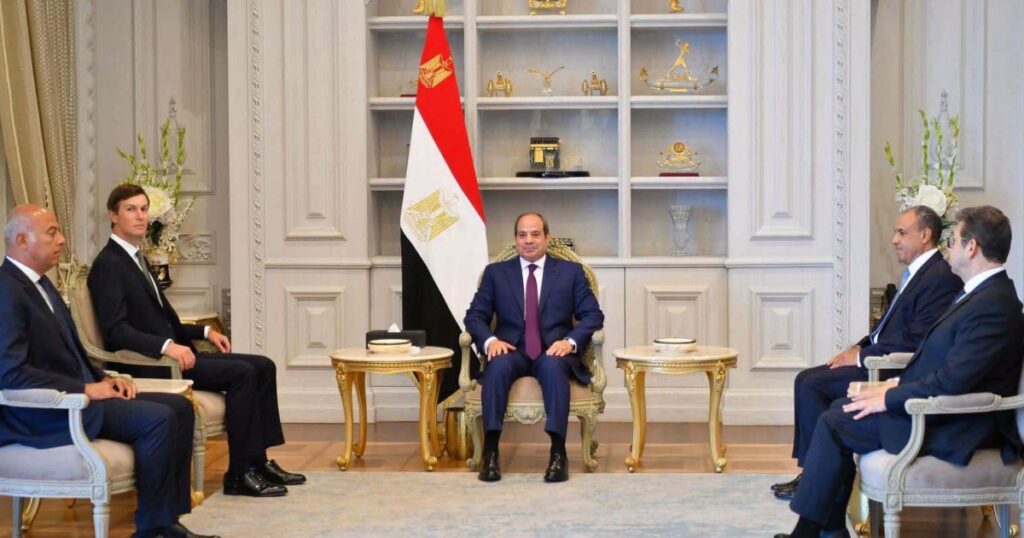
The talks occurred only a day after Kushner held a rare and discreet meeting with Hamas leaders in Egypt. This outreach marked a significant development as it was one of the few instances where a senior US official engaged directly with Hamas representatives, who are regarded as a terrorist organization by Israel and the United States.
Kushner’s strategy highlights a new phase in the diplomatic approach towards the Gaza Strip, seeking to bridge gaps between Israel and Palestinian factions. The US administration aims to create a framework that can bring long-term peace and stability to the region, acknowledging the complex political and humanitarian dynamics at play.
Prime Minister Netanyahu expressed cautious optimism about the plan, emphasizing Israel’s security concerns and the need for any agreement to guarantee stability. Netanyahu’s government has long insisted that any peace initiative must ensure that Hamas is demilitarized and that the threat of rocket attacks on Israeli territory is eliminated.
The Trump administration’s Gaza plan reportedly includes provisions for economic development, increased humanitarian aid, and a phased political solution that involves Palestinian governance reforms. The plan aims to incentivize cooperation among Palestinian factions and discourage acts of violence.
Critics of the plan argue that it may not adequately address the underlying political grievances of the Palestinians and could be biased towards Israeli interests. Palestinian Authority officials have remained skeptical, with some factions rejecting the plan outright.
The secret talks in Egypt facilitated by Kushner were seen as an attempt to involve Gaza’s key players in the peace process, hoping to build trust and open channels for dialogue. Egypt has historically played a mediating role in conflicts between Israel and Hamas, providing a neutral ground for negotiations.
Observers note that Kushner’s back-channel diplomacy attempts to break long-standing stalemates by engaging directly with groups that have previously been excluded from negotiations. This approach signifies a shift from conventional diplomatic methods.
The international community continues to watch developments closely, recognizing the potential for either progress or further complications. The US hopes that the renewed dialogue can lead to a comprehensive peace agreement that serves the interests of Israelis and Palestinians alike.
In summary, Kushner’s meetings with Netanyahu and Hamas representatives mark a critical moment in the Trump administration’s efforts to address the Gaza conflict. The success of this initiative remains uncertain, but the willingness to engage with diverse stakeholders reflects a nuanced attempt at conflict resolution in one of the world’s most challenging geopolitical hotspots.