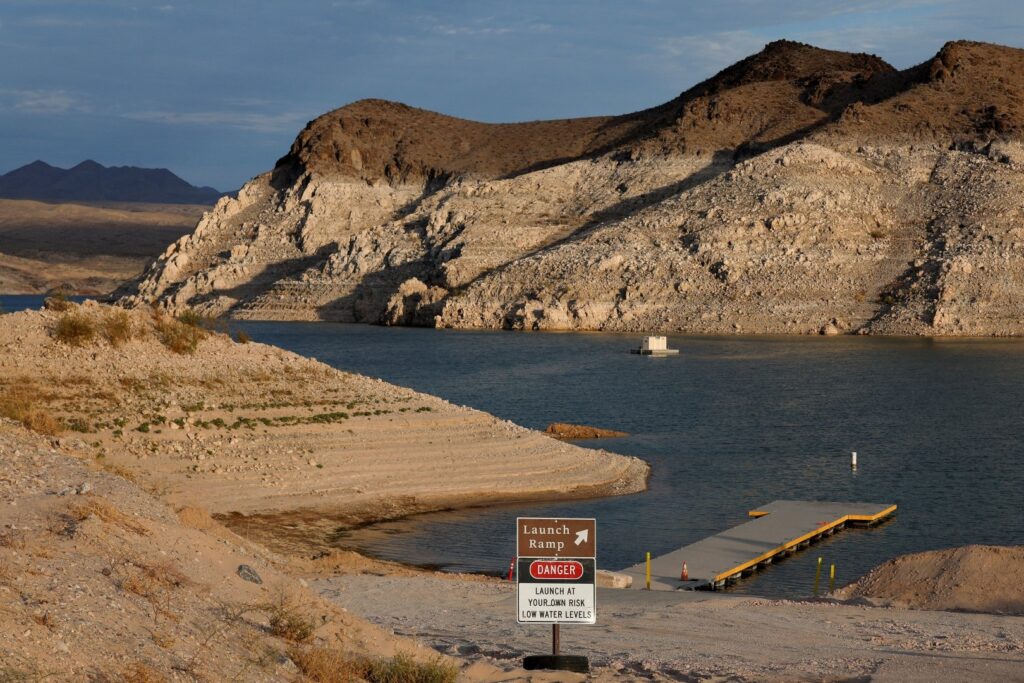
Lake Mead, the largest reservoir in the United States, situated along the border of Arizona and Nevada, has plummeted to a historic low level. This alarming decline poses significant risks to the water supply for not just Arizona and Nevada, but also California, endangering millions of residents who rely on this crucial resource. Once a robust symbol of water abundance in the arid Southwest, Lake Mead has been steadily shrinking amid ongoing drought conditions and increased water demand. Experts attribute this unprecedented drop to a combination of prolonged drought exacerbated by climate change, as well as population growth in the region.
The reservoir, created by the Hoover Dam, has long been a vital water source supporting agricultural irrigation, municipal water needs, and hydroelectric power generation across the southwestern United States. However, with Lake Mead’s levels reaching new lows, authorities have implemented mandatory water restrictions and are exploring emergency measures to manage this crisis. The reduction in water volume not only affects human consumption but also threatens ecosystems that depend on this aquatic habitat.
Water managers warn that if levels continue to decline, it could trigger cuts in water allocations outlined under the Colorado River Compact, fundamentally reshaping water rights and usage policies. This compact governs how water from the Colorado River is divided amongst seven states, including Arizona, Nevada, and California. The record low levels underscore the urgent need to rethink water conservation strategies, invest in sustainable water infrastructure, and address climate adaptation measures.
Local governments and federal agencies are collaborating to monitor the situation closely, educating the public on conservation efforts while seeking long-term solutions. Experts emphasize that reversing this trend requires a multi-faceted approach, including reducing water waste, modernizing irrigation techniques, and enhancing groundwater recharge efforts.
The steady decline of Lake Mead serves as a stark reminder of the environmental challenges facing the American Southwest and the critical importance of sustainable water management in an era of climate uncertainty. With summers becoming hotter and precipitation patterns more unpredictable, safeguarding this essential water reservoir is imperative to the region’s economic stability and quality of life.
As residents, policymakers, and environmentalists grapple with these water resource challenges, the story of Lake Mead is emblematic of broader global issues around climate resilience, resource management, and the balance between human needs and natural ecosystems. Moving forward, the collaborative efforts of states, tribes, and stakeholders will be essential in shaping a resilient water future for Lake Mead and the millions who depend on it.