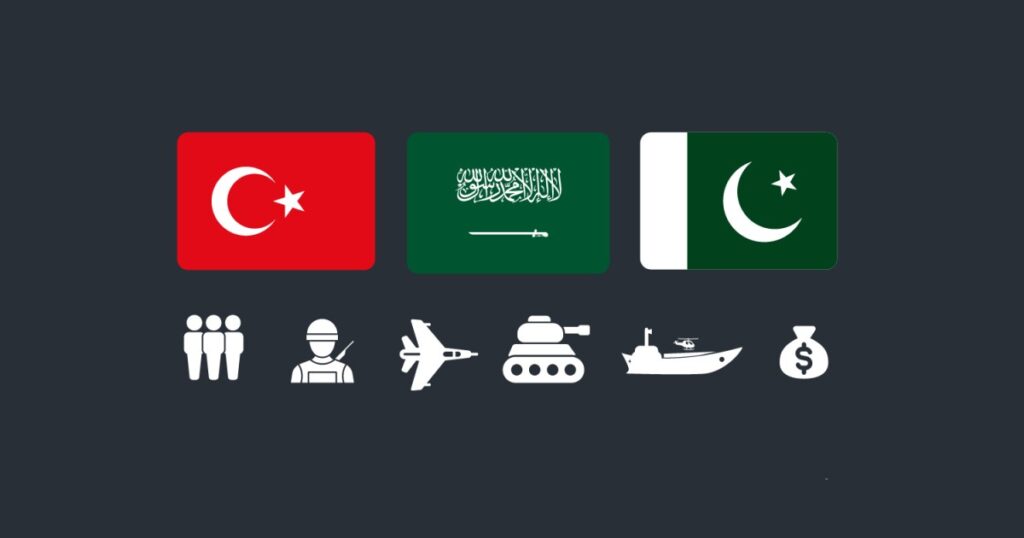
In a geopolitically significant union, Saudi Arabia, Turkiye, and Pakistan have formed what is known as the Mecca Defence Pact. This trilateral accord represents a powerful collaboration combining diverse and formidable military capabilities. Each nation brings unique strategic advantages, making their joint alliance a notable force in regional and global security dynamics.
Saudi Arabia, as one of the world’s top oil exporters, leverages vast financial resources to maintain a well-equipped and highly modernized military. The Kingdom’s defense infrastructure focuses heavily on advanced technology and purchasing cutting-edge weaponry from global suppliers, including the United States and Europe. Saudi Arabia also possesses significant air power and missile defense systems that serve as a critical shield in the Gulf region.
Turkiye, formerly known as Turkey, commands the second-largest army in NATO, reflecting a highly trained and battle-experienced force. Its military is characterized by a robust mix of mechanized infantry, armored units, and a well-developed domestic defense industry. Turkish forces have extensive operational experience from engagements in Syria, Iraq, and other regional conflicts, enhancing their tactical and strategic competence. Turkiye’s geographical position bridging Europe and Asia provides the alliance with critical strategic depth and access.
Pakistan brings to the pact the unique distinction of having the only Muslim nuclear arsenal. Its military is a force of considerable size, with a focus on both conventional and strategic deterrence capabilities. Pakistan’s nuclear weapons program serves as a critical balancing factor in South Asia, and its armed forces have extensive experience from counterinsurgency operations and conventional warfare scenarios. The Pakistan military’s expertise in diverse terrain—from mountainous regions to deserts—adds to the alliance’s versatility.
The Mecca Defence Pact thus combines Saudi Arabia’s financial muscle and modern technological edge, Turkiye’s NATO-level operational strength, and Pakistan’s strategic nuclear deterrent. This coalition marks a significant shift in military cooperation among Muslim-majority countries, aimed at enhancing collective security and political influence.
Beyond sheer military power, the alliance fosters greater intelligence sharing, joint training exercises, and coordinated defense strategies. It is widely seen as a counterbalance to regional powers and an effort to stabilize a volatile Middle East and South Asia region.
In conclusion, the Mecca Defence Pact unites distinctive military capabilities: an oil-rich kingdom with advanced technology; a NATO powerhouse with battle-hardened troops and industry; and a nuclear-armed state with strategic depth. Together, Saudi Arabia, Turkiye, and Pakistan present a robust and multi-dimensional military coalition with potentially far-reaching geopolitical implications.