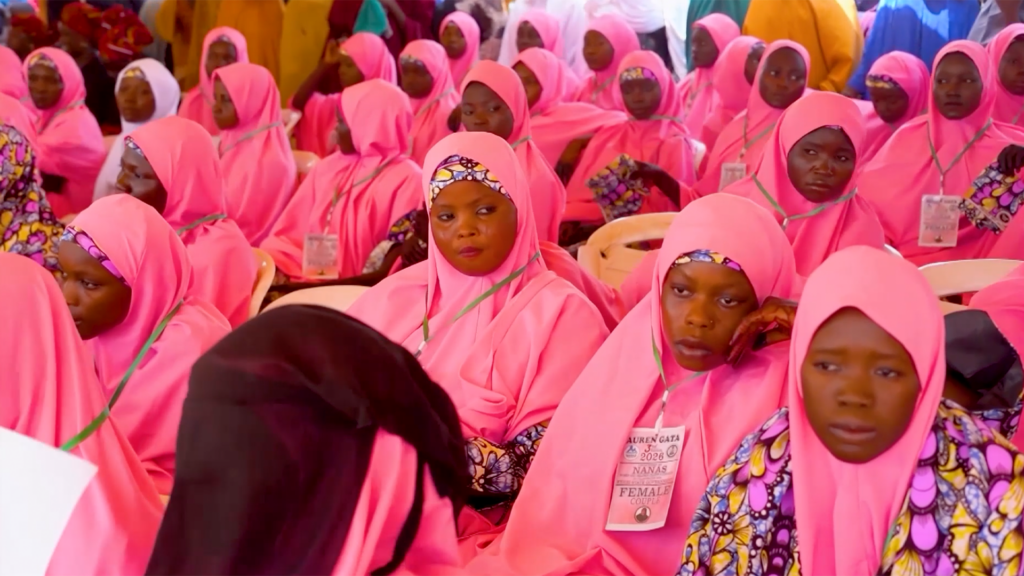
In a heartwarming social initiative, the Nigerian government has been organizing mass weddings over recent days to assist low-income families in overcoming the financial barriers associated with marriage. Marriage ceremonies, which are culturally significant and often elaborate in Nigeria, can be prohibitively expensive, making it difficult for many young couples to wed legally and publicly.
The initiative targets couples who struggle to afford the costs of traditional weddings, which typically include venue hire, catering, attire, and various customary rites that cumulatively place a heavy financial burden on families.
By conducting mass weddings, the government aims to reduce these expenses significantly by holding large-scale ceremonies that unite many couples at once. This approach not only minimizes the cost per individual couple but also fosters a sense of community and mutual support among participants.
Officials involved in the program have noted that the initiative aligns with broader social welfare goals, aiming to enhance family stability and social cohesion. Particularly in regions where unemployment and poverty rates are high, the program offers a critical pathway for young couples to formalize their unions without falling into financial strain or social marginalization.
Each mass wedding event features combined ceremonies led by religious and traditional leaders, ensuring that both civic and cultural customs are respected. Couples receive official marriage certificates, which grant them legal recognition as spouses, vital for rights related to property, inheritance, and child custody.
Participants express gratitude for the initiative, highlighting how it has enabled them to fulfill their dreams of marriage without incurring debilitating debt. Many emphasize that without this assistance, the dream of legally formalizing their relationships would remain out of reach.
Community leaders have praised the government for acknowledging the traditional importance of marriage while innovating to meet the current economic challenges faced by many Nigerians.
Aside from financial relief, the mass weddings also serve as platforms for educating couples on marital responsibilities, health, and family planning, contributing to overall family welfare.
This program marks a significant step in social policy, reflecting the government’s commitment to inclusivity and support for vulnerable populations. It highlights the critical intersection of tradition, modern governance, and community development in Nigeria today.
As the initiative continues, there are plans to expand it to more regions and integrate additional support services for newlyweds, including counseling and economic empowerment programs.
In conclusion, Nigeria’s mass wedding program stands as a pioneering effort to make marriage accessible to all, regardless of economic status, fostering stronger, legally recognized families and promoting social well-being nationwide.