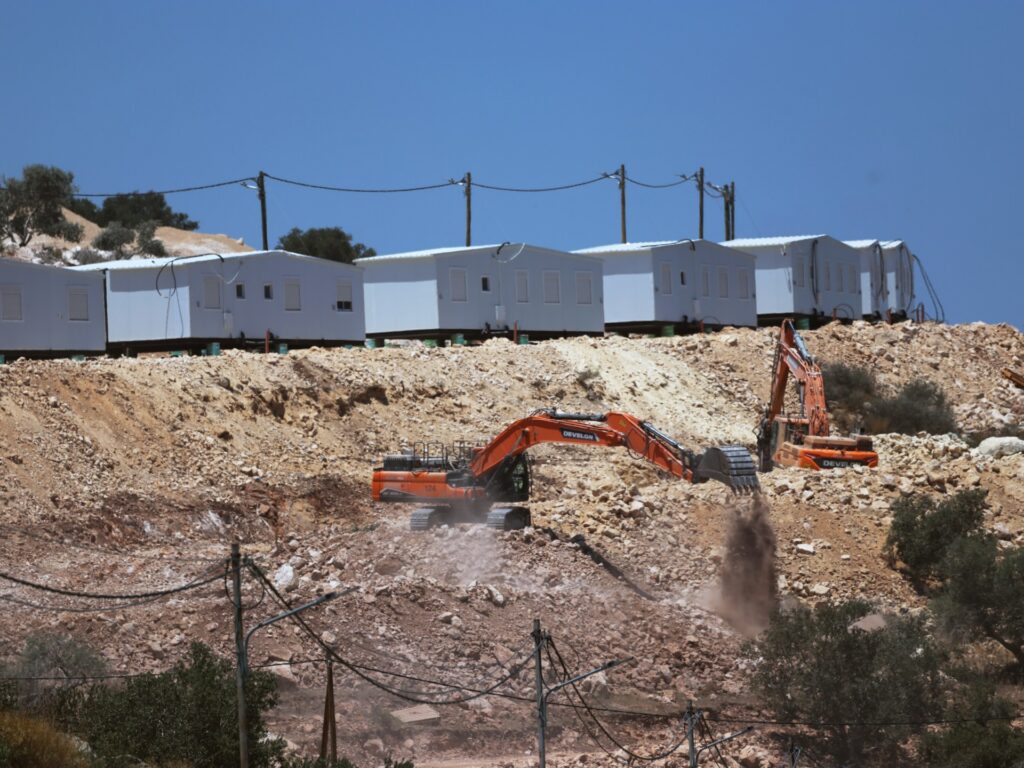
The Israeli government has taken a significant step forward by advancing plans to construct 627 settlement units in the occupied West Bank. This new development has sparked renewed concerns among Palestinian officials and international observers, who warn that these settlements further deepen the divide and complicate efforts to maintain Palestinian ties to Jerusalem.
The tender for the construction of these units marks one of the latest moves in a series of actions aimed at expanding Israeli settlements in the West Bank, a territory that Palestinians envision as part of their future state. Israeli authorities argue that such construction is necessary to accommodate natural population growth and to strengthen their presence in strategically important areas.
Palestinian officials have expressed alarm, viewing these plans as a deliberate attempt to disrupt the social and geographical fabric of Palestinian communities and to sever their historical and cultural connections to Jerusalem. They see the expansion as an obstacle to peace and a violation of international law, which regards the Israeli settlements as illegal under the Fourth Geneva Convention.
The international community, including the United Nations and numerous European countries, has consistently condemned settlement expansion, calling for a halt to activities that undermine the prospects for a two-state solution. Despite these calls, the Israeli government has continued with its settlement policies, citing security needs and historical claims.
The new tender involves a substantial number of residential units, which would require infrastructure development, including roads, utilities, and security arrangements, further entrenching Israeli control over the area. This expansion is expected to exacerbate tensions between Israelis and Palestinians and could lead to increased friction on the ground.
Settlements in the West Bank have long been a contentious issue, central to the conflict between Israelis and Palestinians. Their presence complicates negotiations over borders, sovereignty, and the status of Jerusalem—issues that remain unresolved despite numerous attempts at peace talks.
Critics argue that settlement activities undermine the viability of a contiguous and independent Palestinian state by fragmenting the territory and limiting Palestinian movement. Supporters of the settlements argue they are essential for Israel’s security and reflect historical and religious ties to the land.
As Israel advances with the tender, diplomatic efforts to address the ongoing conflict may face additional hurdles. The expansion is likely to fuel anger and resentment among Palestinians and could impact regional stability, drawing reactions from neighboring countries and international actors.
Human rights organizations have also condemned the construction plans, highlighting the impact on Palestinian residents’ rights, including issues related to property, access to resources, and movement restrictions.
The situation underscores the complex and deeply rooted nature of the Israeli-Palestinian conflict, where urban planning and settlement activities have broad political, social, and humanitarian implications.
In conclusion, the advancement of plans for 627 settler units in the occupied West Bank represents more than just a construction project. It symbolizes ongoing disputes over land, identity, and sovereignty that continue to define and challenge efforts toward peace in the region. The international community’s response and future diplomatic engagements will be crucial in shaping the trajectory of this conflict.