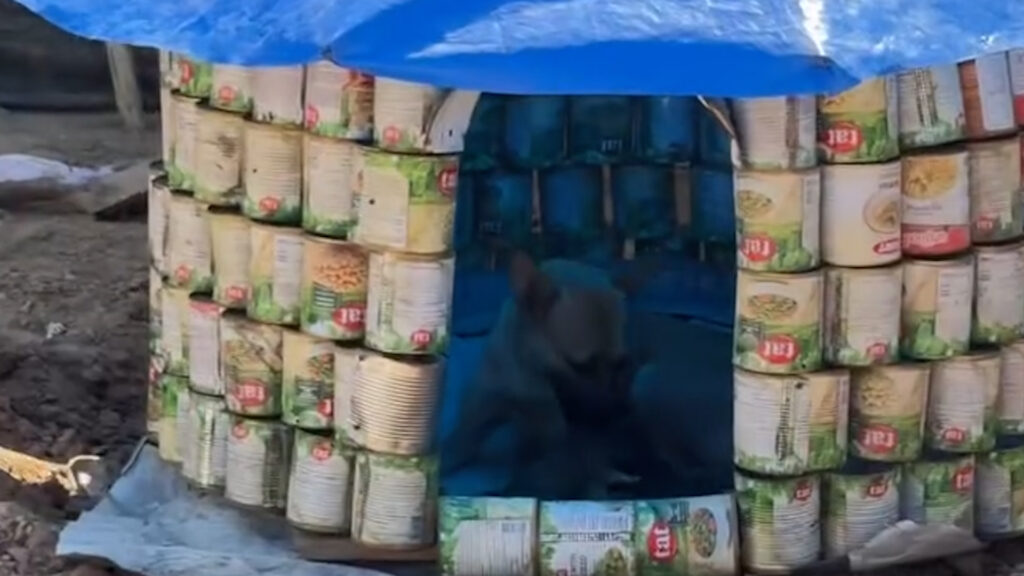
In the heart of Gaza, where resources are scarce and challenges abound, a creative engineer has taken an innovative approach to address the needs of stray and abandoned animals. By repurposing empty cans, this engineer has constructed durable and eco-friendly shelters that provide safety and comfort to local animals.
The project emerged from a vision to combine environmental consciousness with community welfare. Empty cans, often discarded as waste, were collected and meticulously transformed into sturdy shelter walls. This not only helps in reducing litter but also offers a sustainable solution for animal protection.
The shelters are designed to withstand the region’s harsh environmental conditions, including extreme heat and occasional storms. Their insulating properties keep the interiors cool during scorching summer days and relatively warm during cooler nights, ensuring the well-being of the animals.
Community involvement has been pivotal in the success of this initiative. Locals participate in gathering cans and assembling shelters, fostering a collective spirit of care and responsibility for the area’s stray animals.
This initiative also raises awareness about animal rights and the importance of sustainable practices. By showcasing how waste materials can be recycled into beneficial projects, the engineer inspires others to think creatively about environmental challenges.
The shelter project has received positive feedback from animal welfare organizations and residents alike, highlighting the potential for simple, low-cost solutions to make significant impacts in crisis-stricken regions.
As Gaza continues to face numerous difficulties, initiatives like these symbolize resilience and hope, proving that innovation and compassion can thrive even in the most challenging circumstances. The engineer hopes to expand the project further, encouraging more communities to adopt similar environmentally friendly approaches to animal welfare.
In summary, this Gaza engineer’s use of empty cans to build animal shelters is a remarkable example of ingenuity and sustainability, addressing both environmental and social issues while improving the lives of many vulnerable animals.