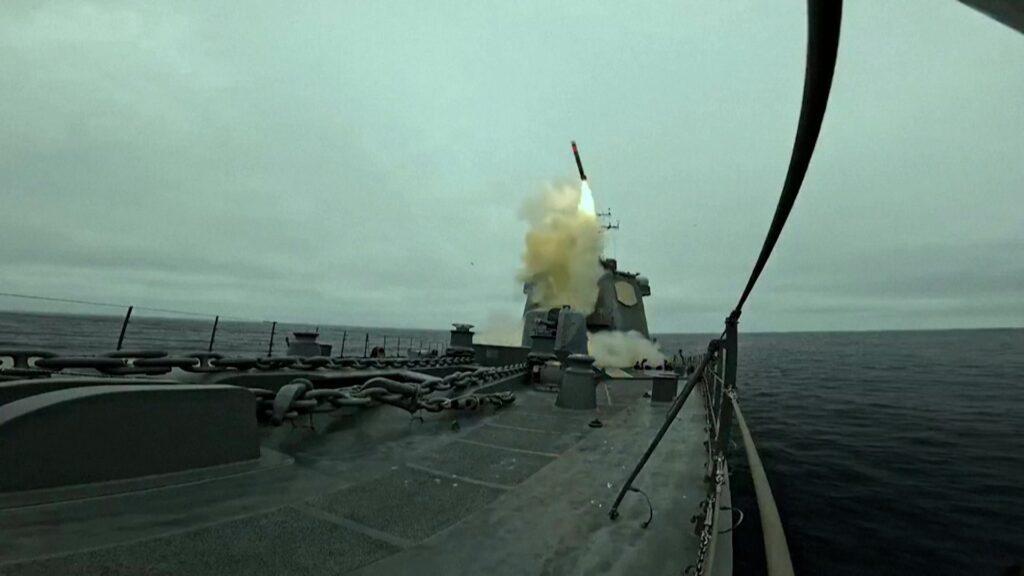
On July 29, Japan successfully tested a US-made Tomahawk cruise missile, launching it from the Chokai warship in the Pacific Ocean. This development is notable as it symbolizes a significant shift in Japan’s post-World War II defense posture, traditionally characterized by military restraint imposed by its pacifist constitution.
The test underscores Japan’s expanding military capabilities amidst rising regional security concerns. The Tomahawk missile, known for its precision and long-range strike capabilities, is a key element in the United States’ arsenal and its presence in Japan’s defense forces enhances Tokyo’s strategic deterrence.
Since the end of World War II, Japan has maintained a Self-Defense Force constrained by constitutional limits, particularly Article 9, which renounces war and prohibits the maintenance of traditional military forces. However, evolving geopolitical dynamics in the Asia-Pacific region, including threats from North Korea’s missile programs and China’s growing military assertiveness, have pressured Japan to reconsider its defense limitations.
Japan’s move to test American Tomahawk missiles is a clear demonstration of this policy shift. Integrating such advanced weaponry into its naval capabilities marks a move towards enhancing offensive deterrence as opposed to purely defensive capabilities.
The Chokai destroyer, a modern warship equipped with the Aegis combat system, was the platform for this missile test. This illustrates Japan’s ongoing investment in upgrading its defensive technology and interoperability with the US military.
The test not only boosts Japan’s tactical options but also reinforces the US-Japan security alliance, which is pivotal in maintaining balance and ensuring stability in the Indo-Pacific region.
Critics of Japan’s changing defense stance argue that it could provoke regional arms races or escalate tensions, especially with China. However, proponents assert that a stronger Japan is necessary for regional peace and to deter aggression, emphasizing the shift is defensive in nature.
This missile test highlights broader discussions within Japan regarding constitutional reform and the role of the Self-Defense Forces. While the government has yet to formally amend the constitution, practical steps like this weapons testing signal a gradual evolution of Japan’s national security policy.
In summary, the July 29 missile test represents a milestone in Japan’s security strategy, balancing legacy pacifism with contemporary security requirements. It signals Japan’s move toward bolstering its capability to respond to emerging threats and participate more assertively in regional defense frameworks.
As geopolitical tensions persist in the Pacific, Japan’s enhanced missile capabilities could be a vital deterrent ensuring the protection of its interests and those of its allies.