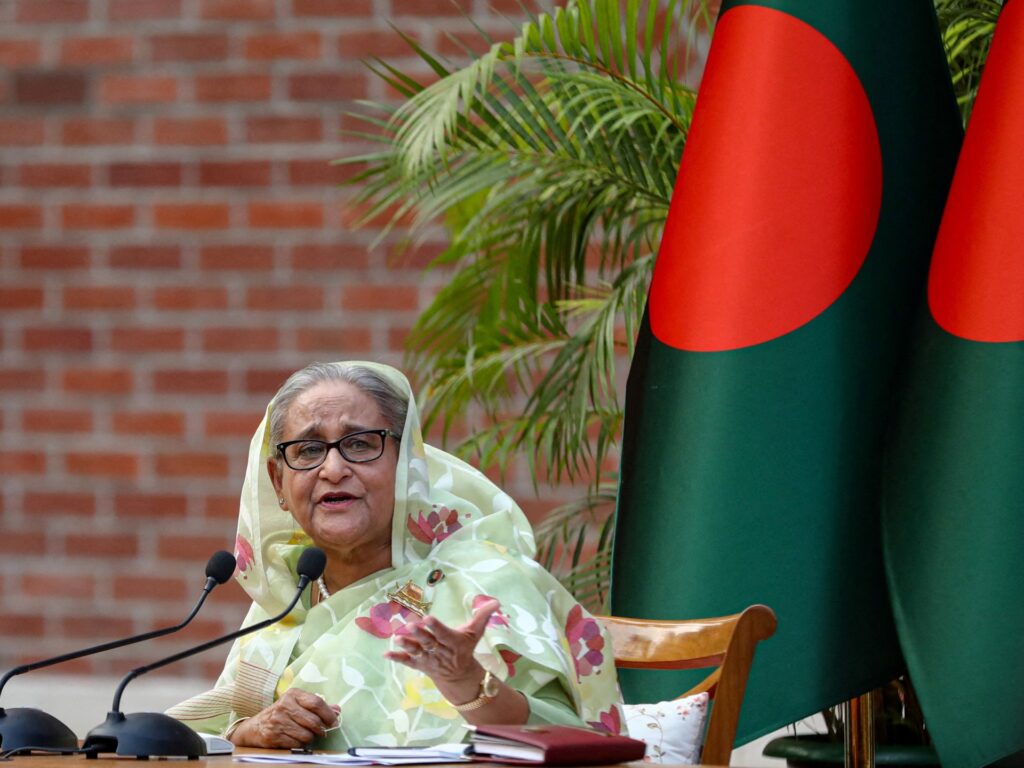
In a recent turn of events, India has officially denied any involvement in the planned speech of former Bangladesh Prime Minister Sheikh Hasina, who is currently living in exile in New Delhi. The Indian government clarified that it has no part in the organization or facilitation of what is described as Hasina’s ‘private’ event.
Sheikh Hasina, a prominent political figure in Bangladesh, has been residing in New Delhi in self-imposed exile amidst political turmoil in her home country. Reports of her planned speech had sparked speculation about possible Indian support or involvement, fueling diplomatic sensitivities between the two neighboring countries.
New Delhi’s statement aimed to dispel these rumors, emphasizing that the speech is a private affair and India has not extended any official assistance or approval related to it. This stance reflects India’s intention to maintain a neutral position concerning internal political matters of Bangladesh.
The clarification is likely aimed at both domestic and international audiences to prevent misunderstandings and uphold diplomatic decorum. Given the complex history and political ties between India and Bangladesh, any perceived interference in Bangladesh’s political landscape can lead to heightened tensions.
India and Bangladesh share strong cultural, economic, and strategic relationships, often navigating challenges with careful diplomacy. The Indian government’s explicit denial reiterates its commitment to respecting Bangladesh’s sovereignty and political processes.
Observers note that Hasina’s presence in New Delhi and her planned activities could have broader implications for regional politics. Indian authorities are thus keen to separate themselves from any interpretation of direct involvement to avoid complicating bilateral relations.
The situation remains dynamic as more details about Hasina’s plans emerge. However, for now, India maintains that it is not a participant or organizer of Hasina’s upcoming speech, framing it firmly as her private initiative.
This development underscores the delicate nature of political exile and the international considerations that come into play when political leaders operate beyond their national borders. It also reflects the broader geopolitical balancing act India performs in South Asia to sustain peaceful neighborly ties while managing internal and external political developments.
As both countries continue to monitor the situation, it is expected that diplomatic channels will remain active in addressing any emerging concerns, ensuring that the incident does not escalate into a larger diplomatic dispute.