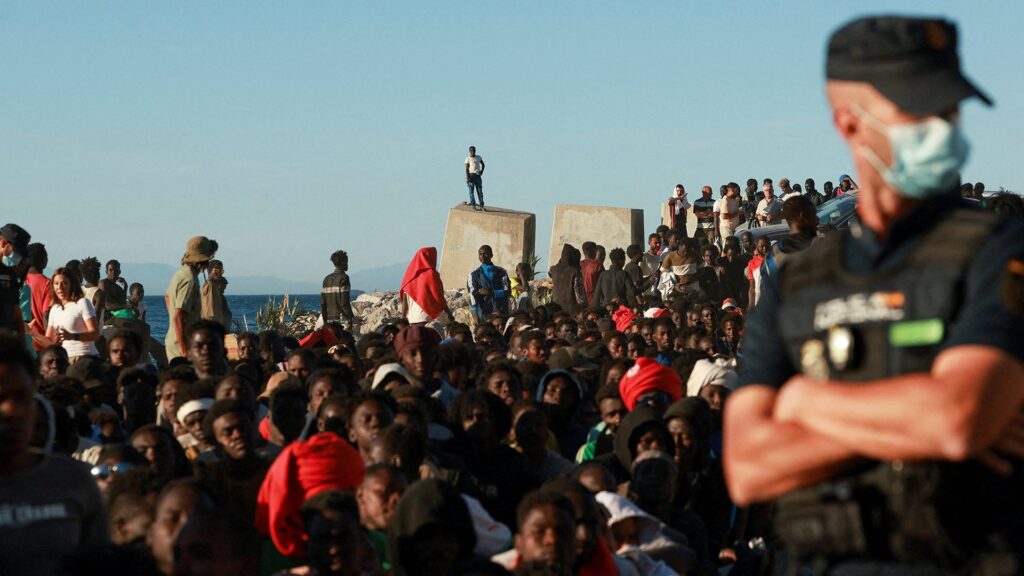
In response to an unprecedented influx of more than 70,000 migrants crossing into Ceuta, the European Union has extended emergency assistance to Spain aimed at strengthening border controls and managing the situation effectively. The sudden surge of migrants last week triggered urgent discussions among EU leaders and prompted a swift response to address the humanitarian and security challenges posed.
Ceuta, a Spanish autonomous city on the northern coast of Africa, serves as a critical gateway between Europe and Africa. Its strategic location has historically made it a focal point for migration and border control efforts. However, the recent spike in crossings has overwhelmed local authorities, raising concerns about both migrant welfare and regional stability.
During an emergency meeting convened to tackle the crisis, EU officials deliberated on measures to support Spain’s efforts in handling the mass arrival. The assistance package includes deploying additional border security personnel, enhancing surveillance technology, and providing humanitarian aid to ensure the migrants’ immediate needs are met.
The EU’s intervention also emphasizes cooperation with Moroccan authorities, whose role is pivotal in managing migration flows across the region. Joint efforts are expected to improve border management infrastructure and foster shared responsibility between the nations involved.
Human rights organizations have urged the EU and Spain to uphold protections for migrants and reject any actions that could jeopardize their safety. The balance between enforcing border security and ensuring humane treatment remains a critical aspect of the ongoing response.
This emergency aid marks a significant moment for the EU as it grapples with complex migration challenges affecting member states’ external borders. It underscores the need for coordinated strategies and comprehensive support mechanisms that address not only border control but also the broader social and political aspects of migration.
The situation in Ceuta highlights the pressing urgency for sustainable migration policies within the EU, integrating border security with humanitarian considerations. As this assistance is rolled out, continuous monitoring and assessment will be essential to adapt to evolving dynamics and mitigate future crises.
Spain has welcomed the EU’s support, viewing it as a crucial step in stabilizing the situation and ensuring that border operations can function effectively under heightened pressure. The cooperation between Spain, the EU, and Morocco signals a collective commitment to managing migration in a manner that respects human dignity while safeguarding national and regional security.
Looking forward, the EU faces the delicate task of balancing openness with regulation, a challenge echoed across its external frontier regions. The Ceuta incident serves as a reminder of the broader migration challenges across Europe, driving calls for unified, responsive, and compassionate policy frameworks to manage migration in the years ahead.