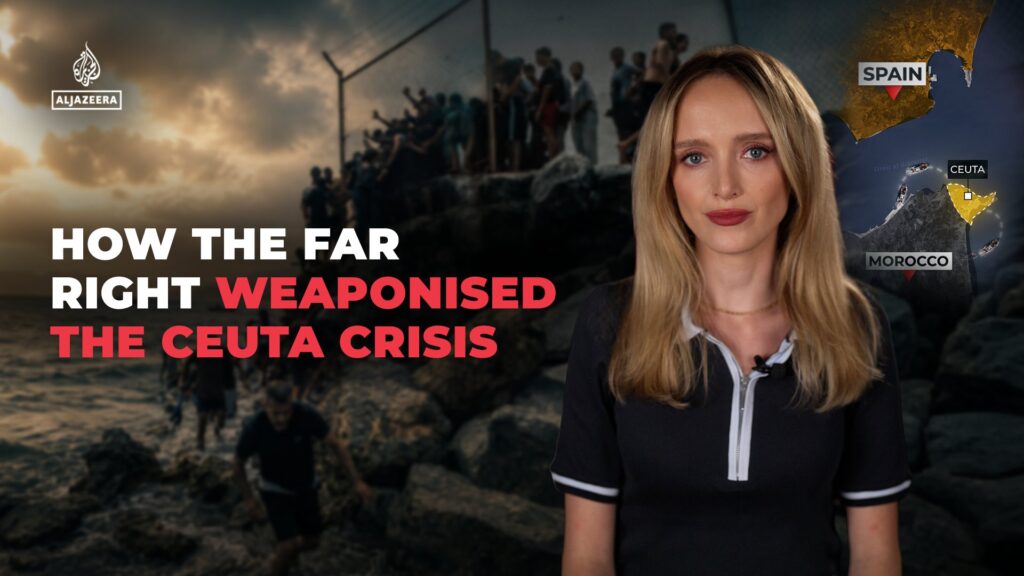
In May 2021, a tragic event unfolded at Ceuta, a Spanish enclave on the northern coast of Africa. More than 72 migrants lost their lives trying to reach the Spanish shores, desperate to cross into Europe. The incident, a human tragedy of immense proportions, soon morphed into a highly charged political flashpoint, weaponised by far-right groups for their agendas.
Ceuta, along with Melilla, forms one of the last European footholds on African soil and serves as a gateway for migrants attempting to enter Europe. The perilous sea journey often results in tragic loss of life, as many do not make it past the strong maritime border.
The migrant deaths were a heart-wrenching reminder of the broader migration crisis facing Europe and North Africa. The individuals involved were mostly from sub-Saharan Africa, fleeing poverty, conflict, and instability in search of a better life.
Despite the humanitarian tragedy, within hours of the incident becoming known worldwide, far-right political factions began exploiting the situation. They framed the tragedy not as a humanitarian issue but as a crisis of law, order, and national identity. The narrative from these groups depicted migrants as threats to national security and cultural cohesion.
Far-right groups used the Ceuta crisis to bolster anti-immigration sentiments, calling for stricter border controls, increased military presence, and harsher penalties on irregular migration. Social media platforms became battlegrounds where misinformation and inflammatory rhetoric spread rapidly, often obscuring the complex realities behind migrant movements.
In Spain, this reframing of the crisis heightened tensions and polarized public opinion. It pressured mainstream politicians to adopt tougher stances on immigration, sometimes at odds with humanitarian considerations and European Union policies.
Moreover, the far right also leveraged the event to criticize the Spanish government’s handling of the situation, accusing it of weakness or complicity. This politicisation had international repercussions, affecting Spain’s relations with Morocco, which controls the land border and plays a critical role in migration management.
The Ceuta tragedy highlights the dangers of politicising human suffering. While the loss of migrant lives demands profound empathy and coordinated international response, the far right’s narrative prioritises divisive identity politics and scapegoating.
Activists and human rights organisations have called for more humane and effective approaches to migration that address root causes, protect vulnerable populations, and uphold human dignity and rights. The Ceuta crisis serves as a stark example of how complex humanitarian issues can be co-opted for political gain, underscoring the need for constructive dialogue and comprehensive solutions.
In conclusion, the weaponisation of the Ceuta crisis by the far right reveals how migration tragedies can be exploited to foment division and fear. It is crucial for societies to resist such polarisation and instead work towards compassionate, pragmatic responses that respect human dignity and promote social cohesion.