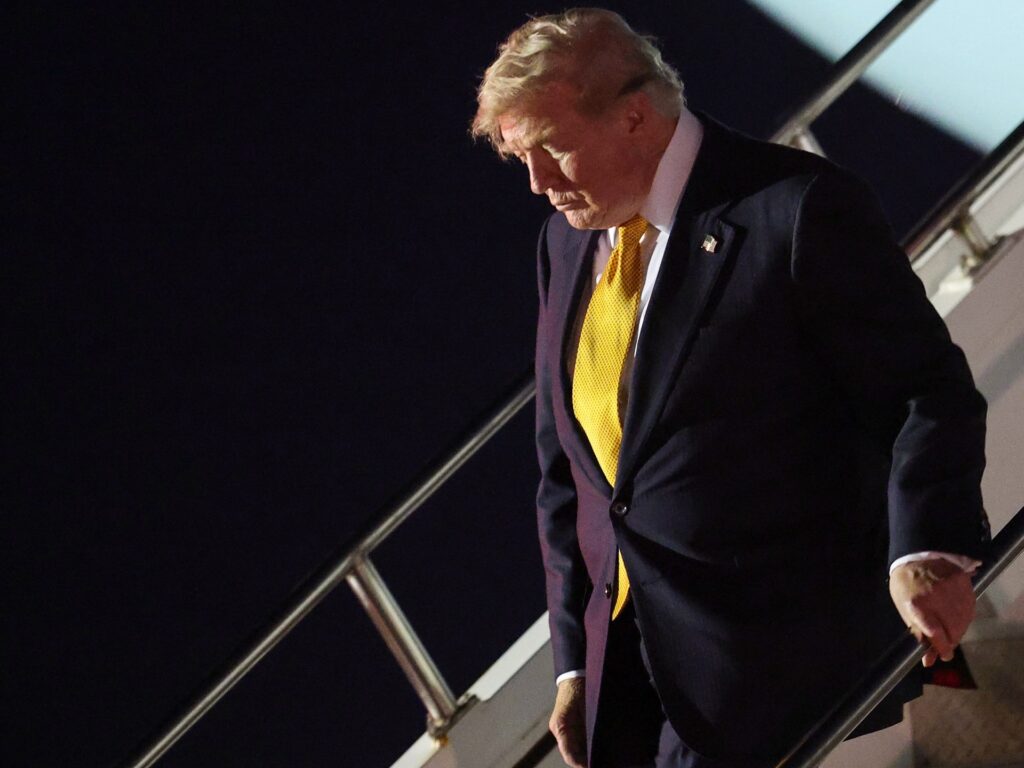
In the midst of escalating tensions and recent exchanges of fire over the strategically critical Strait of Hormuz, former U.S. President Donald Trump has hinted at the possibility of further negotiations with Iran. This development comes as the region remains volatile, with new attacks threatening to push the situation towards a full resumption of conflict.
The Strait of Hormuz, a narrow waterway between the Persian Gulf and the Gulf of Oman, is one of the world’s most important chokepoints for oil transit, making the geopolitical stakes especially high. Recent skirmishes have increased fears of a wider confrontation, impacting global energy markets and international diplomacy.
Trump’s comments suggest a potential thaw in relations, or at least an opening for dialogue, despite the hostile actions observed in the area. However, Iran has yet to respond to these overtures or acknowledge the possibility of negotiations. The silence from Tehran adds to the uncertainty of whether peaceful solutions can be brokered in the current climate.
Analysts emphasize that any constructive engagement between the U.S. and Iran would require overcoming significant barriers, including mutual distrust and past conflicts. The history of contentious diplomatic relations, sanctions, and military incidents complicate the landscape, making the prospect of talks both challenging and critical.
International stakeholders are watching closely as the situation unfolds. The potential for dialogue is welcomed by many who seek to avoid another large-scale conflict in the Middle East, which could have devastating consequences for regional and global stability.
In the meantime, security forces around the Strait of Hormuz remain on high alert as new attacks and countermeasures threaten to escalate the confrontation. The possibility of accidental or intentional engagements could rapidly spiral into wider hostilities if diplomacy does not advance.
Economic repercussions are significant, with oil prices reacting sharply to the events and the potential for supply disruptions through the Strait. This has spurred debate among energy markets and governments on contingency planning and alternative routes for oil transportation.
The broader international community continues to urge restraint and calls for renewed dialogue aimed at de-escalating the conflict. Diplomatic efforts by global powers and organizations may prove pivotal in bringing conflicting parties back to the negotiating table.
As the world watches, the balance between confrontation and negotiation in the Persian Gulf remains delicate. The coming days and weeks will be critical in determining whether peace talks can take hold or if the region will see an intensification of military conflict, with far-reaching implications for international peace and security.